You’ve just navigated a complex error message, finally configured your dual monitors perfectly, or received a hilarious meme in a chat that you need to save. The instinct is immediate: take a screenshot. But if you’re sitting in front of a Dell desktop—be it an Inspiron, XPS, Alienware, or OptiPlex—the array of keyboard keys and built-in tools can be surprisingly confusing. Knowing the fastest, most effective method can save you from fumbling and frustration, turning a simple screen capture into a seamless part of your workflow.
This topic is more crucial than it seems. Screenshots are the universal language for tech support, the cornerstone of creating tutorials, and the simplest way to preserve digital information. Whether you're a professional documenting work processes, a student saving research, or a casual user sharing a moment, mastering your Dell's screenshot capabilities will make you more efficient and effective. This guide will walk you through every native method, from basic keyboard shortcuts to advanced snipping tools, and introduce you to powerful third-party software options for 2026. You'll learn not just how to capture your screen, but how to edit, organize, and share those captures like a pro.
The Foundation: Universal Keyboard Shortcuts
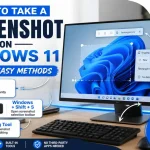
The most immediate way to take a screenshot on any Windows-based Dell desktop is by using keyboard shortcuts. These commands are processed by the Windows operating system itself, making them reliable across all Dell models. The primary key you need to locate is "PrtScn" or "Print Screen," typically found in the upper-right section of your keyboard. On some Dell keyboards, especially compact ones, you may need to press the "Fn" (Function) key simultaneously to activate it. The behavior of this key has evolved, offering you several distinct capture modes.
The classic "PrtScn" key, when pressed alone, captures an image of your entire desktop display and copies it to your clipboard. Nothing will appear to happen—no sound, no flash—but the image is now in temporary memory. You must then open an application like Microsoft Paint, Word, or an email client and paste (Ctrl+V) the image to save or use it. This method is ideal for a quick, one-off capture you plan to edit immediately. For multi-monitor setups, this shortcut captures all screens as one wide image, which you can later crop.
For more targeted captures, use "Alt + PrtScn." This powerful shortcut captures only the currently active window, ignoring your taskbar, secondary monitors, and other background clutter. Imagine you have a calculator app open and a browser behind it; pressing Alt + PrtScn captures just the calculator. This is perfect for creating clean documentation or reporting a specific software error. The captured image is still sent to the clipboard, requiring you to paste it into another program to finalize it. Remember, the window must be in focus (clicked on) for this to work correctly.
The Modern Standard: Windows Snipping Tool & Snip & Sketch
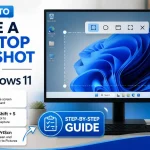
Windows has integrated robust screenshot tools that go beyond the clipboard. The Snipping Tool, and its evolution into Snip & Sketch (often now merged back into a unified "Snipping Tool" in Windows 11 and later), provide delayed, shaped, and annotated captures. You can launch the latest Snipping Tool instantly with the keyboard shortcut "Windows Key + Shift + S." This dims your screen and presents a toolbar at the top, allowing you to choose a rectangular snip, a freeform snip, a window snip, or a fullscreen snip.
Once you select an area, the screenshot is captured and a notification preview appears in the lower-right corner of your screen. Clicking this notification opens the image in the Snipping Tool app for editing. Here, you can use a pen, highlighter, or eraser to annotate directly on the image—circling an important button, blurring out sensitive information, or adding text notes. You can then save the file (recommending PNG for quality or JPEG for smaller size), copy it to the clipboard again, or share it directly via installed apps.
For planned captures, the Snipping Tool app itself offers a "Delay" feature. Open the Snipping Tool from your Start Menu, click "Delay," and choose 3, 5, or 10 seconds. After you click "New," you have that countdown to set up the perfect shot, such as opening a cascading menu that would normally disappear when you try to snip. This is invaluable for creating step-by-step guides. Make it a habit to use Win + Shift + S for quick, flexible captures and the full app for prepared, annotated screenshots.
The Power User's Choice: Dedicated Screenshot Software
While built-in tools are sufficient for many, dedicated third-party software unlocks a new level of functionality for frequent users. These programs offer automated saving, advanced editing, scrolling captures, and cloud integration. In 2026, options like ShareX (free and open-source), Greenshot (free), and Snagit (premium) remain top contenders. They transform screenshotting from a manual task into an automated, organized workflow, saving significant time for content creators, project managers, and developers.
ShareX, for example, is a powerhouse. After installation, you can configure it to automatically save every screenshot to a specific folder with a custom filename (including date and time), upload it to your preferred cloud service (like Imgur, Dropbox, or Google Drive), and even copy the shareable link to your clipboard—all with a single PrtScn key press. It can capture scrolling webpages, record screen video as GIF or MP4, and includes a color picker and ruler tool. The learning curve is steeper, but the automation payoff is immense.
For business and professional use, Snagit by TechSmith offers unparalleled ease and advanced features. Its "All-in-One" capture tool lets you easily capture regions, windows, or scrolling pages with a simple interface. The editor is robust, allowing you to create step-by-step tutorials with numbered bubbles, apply "blur" and "highlight" effects, and even create animated GIFs from video captures. While it's a paid tool, its seamless integration with other TechSmith products like Camtasia makes it the gold standard for professional documentation and training material creation.
Managing Your Screenshots: Organization and Editing Basics
Troubleshooting Common Dell Screenshot Issues
Even with straightforward methods, things can go wrong. A frequent issue on Dell desktops is the "PrtScn" key not working as expected. This is often due to the "Function Lock" (Fn Lock) state. On some Dell keyboards, the PrtScn key shares a function with another key, like "SysRq" or "Insert." Try pressing "Fn + PrtScn" or toggling the "Fn Lock" key (usually "Fn + Esc") to change the default behavior of the top-row keys. Also, check for dedicated "Dell" keyboard software in your system tray that may have remapped the key's function.
Another common problem is screenshots appearing completely black. This is typically caused when trying to capture content from a protected source, such as a video playing in certain DRM-protected applications (like Netflix or some premium streaming services) or a fullscreen game using exclusive fullscreen mode. The workaround is to switch the game to "Windowed" or "Borderless Windowed" mode, or to use the capture tools built into the graphics driver software (like NVIDIA ShadowPlay or AMD Adrenalin) which are designed to capture game footage.
If the Snipping Tool or Snip & Sketch is missing or crashing, you can repair it via Windows Settings. Go to Settings > Apps > Installed apps, find "Snipping Tool," click the three-dot menu, and select "Advanced options." Use the "Repair" button first, and if that fails, try "Reset." As a last resort, you can always fall back to the basic "PrtScn to clipboard" method or use the Windows Game Bar by pressing "Win + G," which has a screenshot widget and works in many applications.
Key Takeaways
- ✓ The Print Screen (PrtScn) key is your universal starting point; use it alone for a full-screen capture or with Alt to capture only the active window.
- ✓ The Windows Snipping Tool (Win + Shift + S) is the most versatile built-in method, allowing for rectangular, freeform, and delayed captures with basic editing.
- ✓ Third-party software like ShareX or Snagit automates saving, organizing, and advanced captures (like scrolling windows), making them essential for power users.
- ✓ Proper screenshot management—using descriptive filenames and organized folders—is critical to avoid digital clutter and save time later.
- ✓ Common issues like a non-responsive PrtScn key or black screenshots often have simple solutions involving the Fn key, display settings, or alternative capture tools.
Frequently Asked Questions
Where does Windows save my screenshots by default?
When you use the "Windows Key + PrtScn" shortcut, Windows saves the screenshot directly as a PNG file in a folder called "Screenshots" inside your "Pictures" library. The path is typically C:Users[YourUsername]PicturesScreenshots. The screen will dim briefly to confirm the capture. Other methods, like the basic PrtScn or Snipping Tool, require you to manually paste and save the image.
How do I take a screenshot on a Dell desktop with multiple monitors?
The standard "PrtScn" key will capture all monitors as one single, wide image. If you only want one monitor, you have two main options. First, use the Snipping Tool (Win + Shift + S) and manually draw a rectangle around the desired monitor. Second, configure your display settings to temporarily disable the other monitor before using PrtScn, though this is less practical. Dedicated software like ShareX often has a "Capture specific monitor" option.
Can I take a screenshot of a right-click context menu?
Yes, but it requires timing because the menu disappears when you click elsewhere. The easiest method is to use the Snipping Tool's delay feature. Open the Snipping Tool, set a 3 or 5-second delay, click "New," and then right-click to open your menu. The tool will capture it after the countdown. Alternatively, you can use the keyboard: open the menu, press "PrtScn" to capture the whole screen, then paste into Paint and crop to the menu.
How do I screenshot just one specific area without opening a tool first?
The fastest way is the "Windows Key + Shift + S" shortcut. This immediately activates the area snipping mode without opening the full app first. Your screen will dim, and your cursor will change to a crosshair, allowing you to click and drag to select the exact rectangle you want. The screenshot is copied to your clipboard and a preview notification appears for quick editing.
My screenshot is blurry or low quality. How can I fix this?
This is usually a file format or compression issue. First, ensure you are saving screenshots in PNG format, which is lossless and preserves sharp text and lines. JPEG format applies compression that can make text look fuzzy. Second, if you are resizing the image, avoid enlarging it beyond its original dimensions, as this will always reduce quality. Finally, check your display scaling settings in Windows; if scaling is set to something like 125%, some older tools may capture at a lower resolution.
Conclusion
Taking a screenshot on your Dell desktop is a fundamental skill with a surprising depth of options, from the instantaneous keyboard press of PrtScn to the sophisticated, automated workflows enabled by professional software. We've explored the full spectrum: the universal keyboard shortcuts that work on any model, the flexible and annotatable Snipping Tool built into Windows, the powerful capabilities of third-party applications for frequent users, the essential practices for organizing your captures, and how to troubleshoot the most common issues you might encounter. Mastering these tools transforms a simple screen grab into an efficient component of your digital communication.
Now, it's time to move from knowledge to practice. Choose one new method from this guide—perhaps the "Win + Shift + S" shortcut or the delay feature in the Snipping Tool—and use it for your next five screenshots. Notice how it integrates into your workflow. Explore the settings in your chosen tool to set up a simple auto-save folder. By intentionally practicing and configuring these systems, you will save time, reduce frustration, and enhance your ability to share visual information clearly and effectively in 2026 and beyond.

Nathaniel Foster is an electronics expert focusing on consumer gadgets, smart devices, and innovative technology. He delivers practical reviews, buying guides, and troubleshooting tips to help readers make informed decisions and get the most out of their electronic products.