You've just navigated a complex error message, finally configured your dual monitors perfectly, or received a hilarious meme in a chat that you need to save. The instinct is immediate: take a screenshot. But if you're sitting at an HP desktop, the exact keys to press might suddenly escape you, leading to a frustrating search that interrupts your workflow. Capturing your screen is a fundamental digital skill, yet the method can vary depending on your operating system, keyboard, and what you're trying to capture.
Knowing how to efficiently take a screenshot on your HP desktop is more than a convenience; it's a productivity multiplier. It allows you to preserve important information, document issues for tech support, create tutorials, and share visual content instantly. This comprehensive guide will walk you through every built-in method for Windows 10 and Windows 11, introduce you to powerful built-in tools like Snipping Tool and Snip & Sketch, and explore advanced techniques for multi-monitor setups and gaming. By the end, you'll be equipped to capture anything on your HP screen with confidence and speed.
The Universal Keyboard Shortcuts: Print Screen and Beyond
The most universal method to take a screenshot on any HP desktop, or any Windows PC for that matter, is the Print Screen key, often abbreviated as PrtSc, PrtScn, or Print Scr. This key is typically located in the upper-right section of your keyboard, near the F12 and Scroll Lock keys. Pressing the Print Screen key by itself captures an image of your entire desktop display, including all open windows and taskbars. However, this action simply copies the image to your computer's clipboard; it does not save a file automatically. You must then open an application like Microsoft Paint, Word, or an email client and paste (Ctrl+V) the image to view, edit, or save it.
For more targeted captures, Windows offers modified shortcuts using the Print Screen key. Pressing Alt + Print Screen copies only the currently active window to your clipboard, which is incredibly useful for isolating a specific program without capturing your entire desktop clutter. A major evolution came with the Windows key + Print Screen shortcut. This powerful combination instantly saves a full-screen screenshot as a PNG image file directly to your Pictures > Screenshots folder. You will see your screen dim briefly as confirmation, and you can then navigate to that folder to find your automatically named file (e.g., "Screenshot (1).png").
It's important to note keyboard variations. Some HP keyboards, especially on compact or multimedia models, may integrate the Print Screen function into a shared key, requiring you to press a Function (Fn) key simultaneously. Look for secondary labels in a different color on your keys. If the Windows key + Print Screen shortcut doesn't seem to work, try Fn + Windows key + Print Screen. For users with multiple monitors, the basic Print Screen key will capture all displays as one wide image, which may require cropping later. We will cover dedicated multi-monitor strategies in a later section.
Harnessing Built-In Tools: Snipping Tool and Snip & Sketch
Windows includes dedicated applications designed specifically for flexible screenshots, moving beyond the limitations of full-screen captures. The primary tool is the Snipping Tool. You can launch it by searching for "Snipping Tool" in the Start menu. Upon opening, click "New" to initiate a capture. The screen will overlay, and you can click and drag to select a rectangular area of any size. The tool also offers Free-form Snip (draw any shape), Window Snip (capture a specific window), and Full-screen Snip modes. After capturing, the image opens in the Snipping Tool editor where you can annotate with a pen, highlighter, or eraser before saving or copying.
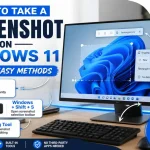
In recent versions of Windows 10 and all of Windows 11, Microsoft has integrated and evolved these features into an updated application, often still called Snipping Tool but with Snip & Sketch functionality. A faster way to launch it is via the keyboard shortcut Windows key + Shift + S. This instantly dims the screen and presents a toolbar at the top of your display with options for Rectangular, Freeform, Window, and Fullscreen snips. After selecting an area, the screenshot is copied to your clipboard and a notification preview appears in the lower-right corner. Clicking this notification opens the image in the Snipping Tool for more robust editing.
The practical advantage of these tools is precision and immediate annotation. For example, if you need to send a colleague a specific error code from a dialog box, use the Window Snip mode to capture just that box cleanly. If you're creating a guide and need to highlight a particular button on a toolbar, use the Rectangular snip and then the highlighter tool to draw attention to it. You can also set a timer delay (3, 5, or 10 seconds) in the Snipping Tool, which is perfect for capturing context menus or tooltips that disappear when you click elsewhere.
Advanced Capture Scenarios: Gaming, Multi-Monitor, and Long Webpages
Modern computing involves complex screen setups that require specialized screenshot approaches. For gamers on HP desktops, Windows includes a powerful feature called Game Bar. Press Windows key + G to open the Game Bar overlay. You can take a screenshot of your active game or app by clicking the camera icon or using the default keyboard shortcut Windows key + Alt + PrtScn. This method automatically saves the screenshot to your Videos > Captures folder. Game Bar is also configured to work well with full-screen applications and can record video clips, making it ideal for capturing gameplay moments.
Managing multiple monitors presents a unique challenge. As mentioned, Print Screen captures all monitors as one combined image. To capture only one specific monitor, you can use the Snipping Tool (Windows key + Shift + S) in Window Snip mode and select the desired monitor's window. For a more advanced solution, the Windows key + Alt + Print Screen shortcut (part of the Game Bar ecosystem) will capture only the currently focused window, which can be on any monitor. Third-party tools often provide more granular control, allowing you to assign shortcuts to capture Monitor 1, Monitor 2, etc.
Capturing an entire lengthy webpage, document, or chat conversation that scrolls beyond the visible screen requires a different technique. While built-in tools can't do this natively, most modern web browsers like Microsoft Edge and Google Chrome have built-in "Capture full page" functions. In Edge, click the Web capture icon in the toolbar or press Ctrl + Shift + S, then select "Capture full page." This creates a seamless image of the entire scrollable content, which you can then annotate and save directly from the browser without any additional software.
Managing and Editing Your Screenshots
Once you've captured a screenshot, knowing where to find it and how to perform basic edits is crucial. Screenshots taken with Windows key + Print Screen are saved automatically to Pictures > Screenshots. Screenshots taken with Game Bar (Windows key + Alt + PrtScn) go to Videos > Captures. Images copied to the clipboard (via Print Screen, Alt + Print Screen, or Windows key + Shift + S) are not saved until you paste them into a program and save them. It's good practice to immediately paste (Ctrl+V) a clipboard screenshot into an app like Paint or Word to prevent losing it if you copy something else.
Basic editing can be done directly in the Snipping Tool or Paint. The Snipping Tool allows for pen annotations, highlighter marks, and cropping. For more detailed edits, such as resizing for a social media profile, adding text boxes, or blurring sensitive information, you will need a more advanced editor. Windows 11 includes the Photos app, which offers decent cropping, rotation, and filter options. For professional needs, consider free tools like GIMP or paid software like Adobe Photoshop. Even cloud-based editors like Canva can be used by uploading your screenshot.
Organizing your screenshots prevents digital clutter. Develop a simple system: regularly move screenshots from the default folders to categorized project folders. Use clear, descriptive filenames instead of the generic "Screenshot (52).png." For instance, rename a file to "Error_Code_0x8001_2026-03-15.png." You can also use the Windows "Sticky Notes" app or OneNote to paste clipboard screenshots directly into your digital notes alongside relevant text, keeping project information consolidated and searchable.
When to Consider Third-Party Software
While Windows provides robust built-in tools, third-party screenshot applications offer enhanced features that can justify the download for power users, professionals, and those with specific workflows. These applications typically provide superior organizational features, such as automatic cloud uploads to services like Google Drive or Dropbox, and direct sharing links. They also often include more powerful editors with pixelation/blur tools for sensitive data, arrow and shape annotations, and the ability to capture scrolling windows natively without browser dependencies.
Popular and highly-rated options include ShareX (free and open-source, extremely feature-rich), Greenshot (free and lightweight), and Snagit (paid, with advanced video capture and editing). These tools allow you to set up custom capture regions, assign global hotkeys for specific actions, and automate the entire process from capture to upload. For example, a tech support specialist might configure ShareX to capture a region, automatically blur out personal user information, upload it to their company server, and copy the URL to their clipboard—all with one keystroke.
However, for the vast majority of HP desktop users, the built-in tools are more than sufficient. Before exploring third-party software, master the native methods covered in this guide. Start by practicing the Windows key + Shift + S shortcut for quick snips and the Windows key + Print Screen for instant full-screen saves. Only consider a third-party tool if you consistently find yourself needing a feature that Windows lacks, such as automated workflows, advanced scrolling captures, or specific annotation styles. The goal is to enhance productivity, not complicate it with unnecessary software.
Key Takeaways
- ✓ The Print Screen (PrtScn) key is your foundational tool; use Alt + PrtScn for the active window and Windows key + PrtScn to save a full-screen screenshot automatically.
- ✓ For precise, flexible captures, use the Snipping Tool or the shortcut Windows key + Shift + S to snip rectangular, freeform, or window selections.
- ✓ Utilize Game Bar (Windows key + G) for capturing gameplay and other full-screen applications, and use browser tools for full-page webpage screenshots.
- ✓ Know your default save locations: Pictures > Screenshots for Windows key + PrtScn and Videos > Captures for Game Bar screenshots.
- ✓ For advanced needs like automated uploads, scrolling captures, or pixelation, explore reputable third-party tools like ShareX, Greenshot, or Snagit.
Frequently Asked Questions
Where do my screenshots go when I press Windows key + Print Screen?
They are automatically saved as PNG files in a folder called "Screenshots" inside your "Pictures" library. The file path is typically C:Users[YourUsername]PicturesScreenshots. Your screen will dim briefly as visual confirmation.
Why doesn't the Print Screen key do anything on my HP desktop?
First, check if your keyboard has a "Fn" or "Function" lock key. On some HP keyboards, Print Screen may be a secondary function on another key. Try pressing Fn + Print Screen. Also, ensure you're not in a specialized application that has overridden the key. If using Windows key + Print Screen, ensure your Windows installation is up to date.
How do I take a screenshot of just one monitor in a multi-monitor setup?
The most reliable built-in method is to use the Snipping Tool shortcut: press Windows key + Shift + S, select the "Window Snip" option from the toolbar, and then click on the specific window or monitor you wish to capture. This will copy only that content to your clipboard.
Can I take a screenshot with a time delay?
Yes, open the Snipping Tool app (search for it in the Start menu). Click on "Delay" and choose 3, 5, or 10 seconds. Then click "New." You will have that amount of time to open a menu or set up your screen before the capture overlay activates.
What is the easiest way to capture a dropdown menu or right-click context menu?
Use the delay feature in the Snipping Tool as described above. Set a 3 or 5-second delay, open the Snipping Tool, trigger the menu (right-click or click the dropdown), and wait for the timer to complete. The menu will stay open for the capture. The keyboard shortcut Print Screen will also capture it if you can press it before the menu closes.
Conclusion
Mastering the various methods to screenshot on your HP desktop transforms a simple task into a seamless part of your digital proficiency. From the instant full-screen capture of Windows key + Print Screen to the surgical precision of the Snipping Tool's freeform snip, Windows provides a toolkit suitable for nearly every scenario. Understanding these tools—where they save files, how to edit them, and which to use for gaming or multi-monitor setups—empowers you to communicate visually, solve problems, and preserve information with remarkable efficiency.
Now, it's time to put this knowledge into practice. Open a window on your HP desktop and try the three core shortcuts: Print Screen, Windows key + Print Screen, and Windows key + Shift + S. Familiarize yourself with the feel of each one and note where the files are saved. Integrate these shortcuts into your daily routine, and you'll soon find that capturing and sharing your screen is second nature, removing a small but significant friction point from your computing experience.

Nathaniel Foster is an electronics expert focusing on consumer gadgets, smart devices, and innovative technology. He delivers practical reviews, buying guides, and troubleshooting tips to help readers make informed decisions and get the most out of their electronic products.