You've just navigated a complex software bug, your screen displays the perfect solution, and you need to share it with your team instantly. Or perhaps you've stumbled upon a hilarious meme, an error message that's been plaguing you, or a receipt for an online purchase you need to save. In our digital-first world, the ability to quickly and accurately capture what's on your computer screen is not just a neat trick; it's an essential skill for communication, troubleshooting, documentation, and preserving information. The humble screenshot remains one of the most powerful yet underutilized tools on the modern PC.
While the basic Print Screen key has been around for decades, the ecosystem of screenshot tools has exploded, offering precision, speed, and functionality that go far beyond a simple full-screen grab. This comprehensive guide will demystify every method available on a Windows PC in 2026, from built-in keyboard shortcuts to advanced third-party applications. You will learn not only how to take a screenshot but also how to choose the right method for any scenario, edit your captures on the fly, and integrate screenshotting seamlessly into your workflow for maximum productivity.
The Foundation: Built-In Windows Keyboard Shortcuts
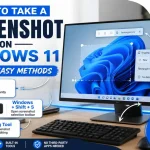
The fastest way to take a screenshot on any Windows PC is by using the dedicated keyboard shortcuts. These require no software installation and are universally available, making them your first line of defense for screen capturing. The classic method is the Print Screen (often labeled PrtScn, PrtSc, or similar) key. Pressing this key captures an image of your entire desktop display and copies it silently to your clipboard. From there, you can paste (Ctrl+V) the image into any application that accepts images, such as Microsoft Word, an email client, or an image editor like Paint to save it as a file. This method is perfect for quick, one-off captures where you intend to immediately use the image.
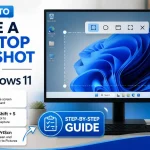
For more targeted captures, Windows offers the Alt + Print Screen shortcut. This powerful combo captures only the currently active window, ignoring everything else on your desktop. This is invaluable when you have multiple applications open and only need to share a specific program, like a dialog box, a browser window, or a software interface. The image is again copied to your clipboard. To elevate your efficiency, use the Windows Key + Shift + S shortcut. This activates the Snipping Tool/Snipping Bar, which lets you select a rectangular area, a freeform shape, a specific window, or the full screen. The capture is copied to your clipboard and a notification appears, allowing for instant annotation and saving.
Mastering these shortcuts involves understanding the clipboard's role. The clipboard is a temporary storage area; its contents are replaced with every new copy action. Therefore, after pressing Print Screen or Alt + Print Screen, you must immediately paste the image into another application before copying anything else. For a more permanent solution that bypasses the clipboard, use the Windows Key + Print Screen shortcut. This captures the entire screen and automatically saves it as a PNG file in your Pictures > Screenshots folder, providing a reliable audit trail of your captures without any extra steps.
Precision Tools: Snipping Tool & Snip & Sketch
For users who need more control than basic shortcuts offer, Windows provides dedicated applications: the modern Snipping Tool (which has absorbed the older Snip & Sketch). You can launch it by searching for "Snipping Tool" in the Start Menu or by pressing Windows Key + Shift + S. The application offers four distinct modes: Rectangular Snip (drag to form a rectangle), Freeform Snip (draw any shape with your mouse or touch), Window Snip (click to capture a specific open window), and Fullscreen Snip. This granularity allows you to capture exactly what you need, eliminating the need to crop later.
Once you take a snip, the tool opens an editing window. This is where its true power shines. You can immediately annotate your screenshot using a pen, highlighter, or eraser in various colors. You can also use the ruler or protractor tools for precise markings, or the text box tool to add written explanations. Practical use cases include circling an important figure in a graph, blurring out sensitive personal information using the new "Protect with text" or blur tool, or adding arrows to point out specific UI elements in a bug report before sending it to IT support.
Beyond simple edits, the Snipping Tool integrates with your workflow. You can set a timer delay of 3, 5, or 10 seconds, which is essential for capturing context menus or tooltips that disappear when you click elsewhere. You can easily copy the snip to the clipboard, save it directly as a PNG, GIF, or JPEG file, or share it via email or other installed apps. For frequent users, pinning the Snipping Tool to your taskbar or setting a keyboard shortcut to open it directly in a specific mode (via Settings within the app) can shave valuable seconds off your screen-capturing process.
Power User Arsenal: Game Bar & Third-Party Applications
Gamers and power users have access to a specialized tool: the Xbox Game Bar. Press Windows Key + G to open the overlay, then click the camera icon or use the shortcut Windows Key + Alt + Print Screen (which saves a screenshot directly to your Videos > Captures folder). The Game Bar is optimized for capturing full-screen applications and games, but it works on the desktop too. Its standout feature is the ability to record screen video (Windows Key + Alt + R), making it a simple, built-in solution for creating quick tutorials or capturing a bug that occurs over time.
When built-in tools aren't enough, robust third-party applications fill the gap. Applications like ShareX (free and open-source), Greenshot (free), and Snagit (paid) offer professional-grade features. These can include scrolling window captures that automatically stitch together an entire webpage or document, OCR (Optical Character Recognition) to extract text from your screenshots, automated workflows that upload a capture to cloud storage and copy the link to your clipboard, and extensive annotation libraries. For example, a technical writer might use ShareX to capture a long software manual, OCR the text for editing, and instantly upload the annotated image to their content management system.
Choosing a third-party tool depends on your needs. For casual, free use with powerful automation, ShareX is unparalleled. For a balance of simplicity and rich annotation features, Greenshot is excellent. For a comprehensive, user-friendly suite with video recording and extensive training resources, Snagit is the industry standard. These tools often run in the background, assignable to custom hotkeys, ensuring that no matter what you're doing—from working in a specialized CAD program to managing a complex spreadsheet—you have a dedicated, powerful capture method at your fingertips.
Beyond the Capture: Editing, Saving, and Organizing
Taking the screenshot is only half the battle; what you do with it afterward is equally important. Basic editing can be performed in the Snipping Tool or Paint, but for more advanced adjustments, consider using Paint 3D for simple cropping and resizing, or a free editor like GIMP or the web-based Photopea for color correction, layer-based edits, or adding complex effects. A common practical step is reducing file size; for web sharing, convert your screenshot to JPEG format and reduce the quality slider, which can shrink a 2MB PNG down to a 200KB JPEG with minimal visual loss.
Organizing your screenshots prevents digital clutter. Avoid letting hundreds of files pile up in your Pictures > Screenshots folder. Establish a simple system: create subfolders by project, client, or year-month. When saving, use descriptive filenames. Instead of "screenshot(1).png," use "2026-04-15_Invoice_Error_Popup.png." This makes files easily searchable later. Many third-party tools can automate this naming and filing process. For team collaboration, integrate your screenshot workflow with cloud storage like OneDrive, Dropbox, or Google Drive, which often have built-in screenshot management and sharing features.
Sharing your captures efficiently is the final step. Instead of attaching large files to emails, use the "Copy Image" function (available in most tools) and paste directly into Slack, Microsoft Teams, or Discord chats. For sharing with people outside your immediate ecosystem, use the "Upload and copy link" feature in tools like ShareX or Snagit, or a dedicated image host like Imgur. This provides a clean, viewable link without clogging inboxes. Remember privacy: always double-check your screenshot for accidentally captured personal data, browser tabs, or confidential information in other windows before sharing publicly.
Pro Tips and Troubleshooting Common Issues
To become a screenshot expert, integrate these pro tips into your routine. For capturing cursor effects, like a hover state or a custom pointer, the Snipping Tool's delay function is essential. To capture a multi-monitor setup in one image, use Print Screen; to capture only one specific monitor, use Windows Key + Print Screen and then crop, or use a third-party tool that allows monitor selection. If you need to document a multi-step process, consider a screen recording with audio narration using Game Bar or a third-party tool, which is often more effective than a series of static images.
Common issues do arise. If the Print Screen key doesn't seem to work, first check for a Function (Fn) lock key on your laptop—you may need to press Fn + Print Screen. Some keyboards, especially on compact laptops, may require using the Windows Key + Fn + Spacebar combination. If the Snipping Tool fails to launch or capture, restart the process via Task Manager. For blurry screenshots, ensure your display resolution is set to its native, recommended setting, and avoid capturing video playback with dynamic resolution; use a screen recorder instead.
Finally, customize your environment for screenshot success. Adjust your default save location to a synced cloud folder for automatic backups. Review and customize the keyboard shortcuts in your chosen third-party app to avoid conflicts with other software. If you frequently capture sensitive data, make a habit of using the blur tool immediately after capture. By tailoring these tools and habits to your specific workflow, the act of taking a screenshot becomes a seamless, almost unconscious part of your digital interaction, empowering you to save, share, and communicate visual information with unparalleled ease.
Key Takeaways
- ✓ The Print Screen key captures your entire desktop to the clipboard, while Alt + Print Screen captures only the active window.
- ✓ Windows Key + Shift + S activates the versatile Snipping Tool for rectangular, freeform, window, or full-screen snips with built-in editing.
- ✓ For automated workflows, scrolling captures, and OCR, powerful third-party applications like ShareX, Greenshot, or Snagit are invaluable upgrades.
- ✓ Effective screenshot management requires descriptive filenames, organized folder structures, and mindful sharing practices to protect privacy.
- ✓ Use the Xbox Game Bar (Windows Key + G) for easy screen recording and captures within full-screen apps and games.
Frequently Asked Questions
Where do my screenshots go when I press Windows Key + Print Screen?
When you use Windows Key + Print Screen, your screen will briefly dim, and the screenshot is automatically saved as a PNG image file. You can find it in your user folder under Pictures > Screenshots. This method bypasses the clipboard, so you don't need to paste it into another program to save it.
How do I take a screenshot of just one monitor in a multi-monitor setup?
The built-in Print Screen shortcut captures all monitors as one wide image. To capture a single monitor, use the Snipping Tool (Windows Key + Shift + S) and select the Rectangular Snip mode, then drag around the desired monitor. Alternatively, third-party tools like ShareX allow you to configure a hotkey to capture a specific monitor directly.
Can I take a screenshot of a context menu or a tooltip that disappears when I click?
Yes, you can use the delay function in the Snipping Tool. Open the Snipping Tool app, click "Delay," and select 3, 5, or 10 seconds. After you click "New," you have that amount of time to open the context menu or hover to reveal the tooltip before the capture occurs automatically.
How can I extract text from an image of a document or webpage?
You need Optical Character Recognition (OCR). The simplest free method is to take your screenshot, paste it into Microsoft OneNote, right-click the image, and select "Copy Text from Picture." Dedicated third-party screenshot tools like ShareX or Snagit have built-in OCR features that can extract text directly from a capture.
My screenshot looks blurry or pixelated. How can I fix this?
Blurry screenshots are often caused by capturing content that is itself scaled. Ensure your display scaling in Windows Settings (System > Display) is set to 100% for the sharpest captures, though this may make UI elements very small. When capturing video or game content, use a screen recorder instead of a static screenshot. Also, save screenshots in PNG format instead of JPEG to avoid compression artifacts.
Conclusion
Mastering the art of the screenshot on your PC desktop transforms a simple function into a powerful conduit for productivity and communication. From the instantaneous clipboard copy of Print Screen to the precision of the Snipping Tool and the automated prowess of third-party applications, you now have a complete toolkit for any scenario. Whether you're compiling a report, reporting a technical issue, creating a tutorial, or simply saving a moment, the right method ensures you capture exactly what you need, when you need it, with minimal fuss.
Now, it's time to put this knowledge into practice. Start by choosing one new method from this guide—perhaps the Windows Key + Shift + S shortcut or the delay timer in the Snipping Tool—and integrate it into your daily computer use for a week Experiment with saving and organizing your captures to build a sustainable system. By consciously refining this everyday skill, you'll save time, reduce frustration, and enhance your ability to work and share ideas in our visually-driven digital world.

Nathaniel Foster is an electronics expert focusing on consumer gadgets, smart devices, and innovative technology. He delivers practical reviews, buying guides, and troubleshooting tips to help readers make informed decisions and get the most out of their electronic products.