In a world that runs on visual communication, the ability to capture exactly what is on your screen is no longer a luxury—it is a fundamental digital skill. Whether you are documenting a software bug for your IT team, saving a memorable video call moment, or creating a step-by-step tutorial for a colleague, knowing how to take a screenshot on a computer can save you hours of explanation. Yet, despite its importance, many users still rely on outdated methods or third-party apps when their operating system already has powerful, built-in tools.
This comprehensive guide will walk you through every major method for taking screenshots on both Windows and macOS desktop computers in 2026. We will cover the classic keyboard shortcuts, the modern snipping tools, and the advanced features that allow you to capture full web pages, record screen activity, and annotate your images. By the end of this article, you will have a complete toolkit for capturing any content on your screen with speed and precision, regardless of which operating system you use.
The Classic Keyboard Shortcuts: Your First Line of Defense
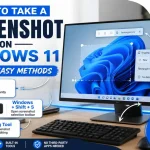
The fastest way to capture your screen is still the keyboard shortcut. On Windows 11 and Windows 10 in 2026, the Print Screen key (often labeled PrtScn or PrtSc) remains the universal starting point. Pressing this key copies the entire screen to your clipboard, allowing you to paste it into an image editor, document, or email. For a more targeted capture, the Alt + Print Screen combination captures only the active window, which is perfect for grabbing a single dialog box or application without the clutter of your desktop background.
On macOS, the landscape is equally straightforward. Pressing Command + Shift + 3 captures the entire screen and saves it directly to your desktop as a PNG file. For a window-specific capture, press Command + Shift + 4, then press the Spacebar. Your cursor will turn into a camera icon, and you can click on any open window to capture it with a beautiful drop shadow. This method is ideal for creating clean, professional-looking screenshots for presentations or documentation.
A practical tip for 2026: if you are using a Windows laptop without a dedicated Print Screen key, you may need to press the Fn simultaneously. Additionally, on macOS, you can hold down the Control key while using any screenshot shortcut to copy the image to your clipboard instead of saving it to the desktop. This is incredibly useful when you want to paste the screenshot directly into an email or chat application without creating a file you have to delete later.
Modern Snipping Tools: Beyond the Basic Capture
While keyboard shortcuts are fast, they lack flexibility. This is where the modern snipping tools shine. On Windows, the Snipping Tool has evolved significantly and is now the primary screenshot utility. You can launch it by searching for Snipping Tool in the Start menu or by pressing the Windows key + Shift + S. This shortcut opens a small toolbar at the top of your screen, giving you four options: Rectangular Snip, Freeform Snip, Window Snip, and Fullscreen Snip. Once you make your selection, the capture is copied to your clipboard and a notification appears, allowing you to open the image in the Snipping Tool editor for annotation.
macOS users have the Screenshot app, which you can access by pressing Command + Shift + 5. This opens a floating toolbar at the bottom of your screen with options to capture the entire screen, a selected window, or a custom portion. The real power of this tool lies in its timer function. You can set a 5 or 10-second delay, which is for capturing context menus, tooltips, or dropdown lists that disappear when you press a keyboard shortcut. The Screenshot app also allows you to choose where your screenshots are saved, whether that is the desktop, documents folder, or clipboard.
In 2026, both operating systems have added AI-assisted features to their snipping tools. Windows Snipping Tool now includes a Text Action feature that can automatically detect and copy text from your screenshot, making it easy to extract information from images or videos. Similarly, macOS Screenshot app can now detect and redact sensitive information like credit card numbers or email addresses with a single click. These features transform your screenshot tool from a simple capture utility into a productivity powerhouse.
Capturing Full Web Pages and Scrolling Content
One of the most frustrating limitations of standard screenshots is their inability to capture content that extends beyond your screen. A single webpage can be several screens tall, and a standard capture will only grab what is visible. Fortunately, both Windows and macOS offer for scrolling screenshots in 2026. On Windows, the Snipping Tool now includes a built-in scrolling capture mode. When you select the Rectangular Snip option, a new button appears that says Capture Scrolling. Clicking this allows you to select a region, and the tool will automatically scroll down the page, stitching together a seamless, high-resolution image of the entire content.
For macOS users, the process is slightly different but equally effective. While the native Screenshot app does not have a scrolling capture feature, you can use the Safari browser's built-in tool. Open the webpage you want to capture, press Command + Shift + 4 to enter screenshot mode, then press the Spacebar to switch to window capture. Instead of clicking on the window, hold down the Option key and click. This will capture the entire contents of the webpage, including all scrollable areas, and save it as a PDF. For non-Safari browsers, third-party apps like CleanShot X or Shottr offer excellent scrolling capture capabilities with annotation tools.
A practical example: imagine you are a project manager who needs to share a lengthy project timeline from a web-based tool. Using the scrolling capture feature, you can capture the entire timeline in one image, ensuring no task or deadline is missed. This is far more effective than sending multiple screenshots or a confusing link. For best results, always ensure your browser window is maximized before starting a scrolling capture, and avoid pages with infinite scroll, as the tool may never stop capturing.
Screen Recording: When a Still Image Is Not Enough
Sometimes a static screenshot cannot convey the full story. If you need to demonstrate a process, show an animation, or record a video call, screen recording is the answer. Windows 11 and 10 include the Xbox Game Bar, which you can launch by pressing Windows key + G. While originally designed for gaming, it works perfectly for recording any application. Click the Record button (or press Windows key + Alt + R) to start recording your active window. The recording saves as an MP4 file in your Videos folder. You can also use the microphone icon to include voiceover narration, which is ideal for creating tutorials.
On macOS, the Screenshot appCommand + Shift + 5) includes a dedicated screen recording mode. You can choose to record the entire screen or a selected portion. A small recording bar appears at the top of your screen, showing the elapsed time and allowing you to stop or pause the recording. For more advanced control, you can click Options to choose your microphone input, show mouse clicks, or set a timer. The resulting video is saved as an MOV file, which is compatible with most video editing software.
In 2026, both platforms have introduced AI-powered recording enhancements. Windows Game Bar can now automatically remove background noise from your microphone, and macOS can detect and highlight mouse clicks with a visible ripple effect. For professional use, consider using the built-in tools for quick recordings, but for longer or more complex projects, dedicated software like OBS Studio (free) or ScreenFlow (paid) offers greater control over multiple audio tracks, webcam overlays, and real-time annotations. A key tip: always test your audio levels before recording a long session to avoid discovering a silent video later.
Annotation, Editing, and Sharing Your Screenshots
Capturing the image is only half the battle; the real value comes from being able to annotate and share it effectively. Windows Snipping Tool includes a basic editor that opens automatically after you take a screenshot. Here you can use a pen, highlighter, and eraser to mark up your image. You can also crop, rotate, and resize the image. For more advanced editing, the Snip & Sketch app (which is being merged into Snipping Tool) offers a ruler and protractor for precise lines and angles. Once edited, you can save the image, copy it to the clipboard, or share it directly via email or social media.
macOS users have the Markup tool, which appears as a small toolbar when you click on the thumbnail that appears in the corner of your screen after a screenshot. This toolbar offers tools for drawing, adding text, shapes, and even your signature. You can also adjust the color and thickness of your annotations. For more complex edits, the Preview app allows you to open any screenshot and use its full suite of image editing tools, including color adjustment, resizing, and adding text boxes. The sharing options on macOS are deeply integrated, allowing you to send your screenshot to AirDrop, Mail, Messages, or Notes with a single click.
A powerful workflow for 2026 involves using cloud-based sharing. Both Windows and macOS allow you to save screenshots directly to OneDrive or iCloud, respectively. This means your screenshot is instantly available on all your devices. For team collaboration, consider using a tool like Dropbox or Google Drive, which can generate a shareable link immediately after you save the screenshot. A final pro tip: name your screenshots descriptively before sharing. A file named bug_report_login_error_2026.png is far more useful than Screenshot_2026_01_15_14_32_11.png, especially when you are searching for it weeks later.
Key Takeaways
- ✓ Master the basic keyboard shortcuts: Print Screen for Windows and Command + Shift + 3 for macOS are the fastest ways to capture your entire screen.
- ✓ Use modern snipping tools (Windows key + Shift + S on Windows, Command + Shift + 5 on macOS) for flexible, targeted captures with built-in annotation.
- ✓ Capture full web pages and scrolling content using the scrolling capture mode in Windows Snipping Tool or the Safari browser's full-page capture feature on macOS.
- ✓ Leverage screen recording tools like Xbox Game Bar (Windows) and the Screenshot app (macOS) for dynamic content that requires video demonstration.
- ✓ Annotate and share your screenshots effectively using built-in editors, and save directly to cloud storage for instant access across all your devices.
Frequently Asked Questions
Why is my Print Screen key not working on Windows?
This is a common issue that can have several causes. First, check if your keyboard has an Fn Lock key that might be disabling the Print Screen function. On some laptops, you need to press Fn + Print Screen. Second, ensure that the Snipping Tool or another screenshot app is not interfering. You can check by opening Task Manager and looking for any screenshot-related processes. Finally, try pressing Windows key + Print Screen, which saves the screenshot directly to your Pictures folder. If none of these work, update your keyboard drivers through Device Manager.
Can I take a screenshot of a single monitor if I have a dual-monitor setup?
Yes, absolutely. On Windows, pressing Alt + Print Screen captures only the active window, which is usually on your primary monitor. For a more precise, use Windows key + Shift + S to open the Snipping Tool, then select the Rectangular Snip option and draw a box around the monitor you want to capture. On macOS, pressing Command + Shift + 3 captures both monitors as separate files. To capture a single monitor, press Command + Shift + 4, then press the Spacebar, and click on the window or desktop of the monitor you want.
How do I take a screenshot on a desktop computer without a Print Screen key?
Many modern keyboards, especially compact or gaming keyboards, omit the Print Screen key. On Windows, you can use the on-screen keyboard by pressing Windows key + Ctrl + O, then clicking the PrtScn button. Alternatively, you can remap another key to act as Print Screen using software like Microsoft PowerToys. On macOS, all screenshot shortcuts use the Command key, so you do not need a Print Screen key at all. For a hardware-free solution, use the Snipping Tool (Windows) or Screenshot app (macOS) can be launched from the Start menu or Applications folder.
What is the best file format for saving screenshots?
For most purposes, PNG is the best choice. It offers lossless compression, meaning no quality is lost, and it supports transparency. JPEG is smaller in file size but introduces compression artifacts, making it unsuitable for screenshots with text or sharp lines. For screenshots that contain only text or diagrams, consider using GIF for simple graphics or WebP for a good balance of quality and file size. If you need to capture a webpage for archival purposes, PDF is excellent because it preserves the layout and allows for text selection.
How can I take a screenshot of a context menu or dropdown that disappears when I press a key?
This is a classic challenge, but there are two reliable solutions. First, use the timer function. On Windows, open the Snipping Tool, click the Delay button, and select 3 or 5 seconds. Then, trigger the context menu, and the screenshot will be taken after the delay. On macOS, use Command + Shift + 5, click Options, and select a timer. Second, you can use the keyboard shortcut for the Snipping Tool (Windows key + Shift + S) which does not close the context menu, then use your mouse to select the area. Practice this a few times to get the timing right.
Conclusion
Taking a screenshot on a desktop computer in 2026 is a remarkably versatile and powerful capability. From the instant gratification of a keyboard shortcut to the precision of modern snipping tools, and from full-page web captures to dynamic screen recordings, you now have a complete arsenal at your fingertips. The key is to match the method to the task: use keyboard shortcuts for speed, snipping tools for flexibility, scrolling capture for long content, and screen recording for dynamic demonstrations. With the built-in annotation and sharing features, you can transform a simple capture into a clear, actionable communication tool.
We encourage you to spend ten minutes today practicing each of the methods described in this guide. Open the Snipping Tool on Windows or the Screenshot app on macOS, and try every option. Create a folder on your desktop called Screenshot Practice and save a few examples. Once you are comfortable, you will find yourself using screenshots more frequently and effectively, saving time and reducing misunderstandings in your personal and professional communication. The ability to capture and share your screen is a small skill with an outsized impact on your productivity.

Nathaniel Foster is an electronics expert focusing on consumer gadgets, smart devices, and innovative technology. He delivers practical reviews, buying guides, and troubleshooting tips to help readers make informed decisions and get the most out of their electronic products.