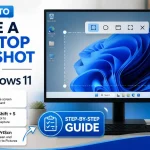
In an age where digital communication dominates, the ability to capture exactly what is on your screen has become an essential skill. Whether you are compiling a work report, troubleshooting a technical issue for a family member, preserving a fleeting moment in a video call, or creating educational content, knowing how to take a screenshot on your desktop is a fundamental tool for productivity and clarity. Yet, despite its importance, many users still rely on outdated methods or third-party software when their operating system already provides powerful, built-in solutions.
This comprehensive guide is designed to demystify the screenshot process for both Windows and macOS users in 2026. We will move beyond the simple Print Screen key and explore the full suite of native tools, keyboard shortcuts, and advanced features available on modern desktops. By the end of this article, you will not only know how to capture your screen but also how to annotate, save, and share your screenshots efficiently, saving you time and frustration. Whether you are a complete beginner or a seasoned user looking to refine your workflow, this guide has something for you.
The Evolution of Screenshot Tools: Why Built-In Solutions Are Now Superior
For decades, the humble Print Screen (PrtScn) key was the only game in town. Pressing it would copy the entire screen to your clipboard, forcing you to paste the image into a program like Microsoft Paint to save it. This two-step process was cumbersome and inefficient. However, with the release of Windows 10 and subsequent updates into Windows 11 and beyond, Microsoft completely overhauled its screenshot capabilities. Similarly, Apple has continuously refined its screenshot tools on macOS, making the process seamless and intuitive.
The primary advantage of using built-in tools in 2026 is integration. Native screenshot utilities are deeply embedded into the operating system, meaning they are always available, receive updates through system patches, and do not consume additional system resources like third-party apps might. They also offer superior security, as you are not granting access to your screen to an external developer. Tools like the Snipping Tool (Windows) and the Screenshot toolbar (macOS) now offer features that were once exclusive to paid software, including timed captures, window-specific shots, and basic video recording.
Furthermore, modern operating systems have streamlined the saving process. Instead of manually pasting and saving, you can now set your screenshots to automatically save to a dedicated folder (like Screenshots in your Pictures folder on Windows or the desktop on macOS). This automation eliminates the risk of losing a capture and makes organizing your images much simpler. The days of cluttered clipboards and forgotten captures are over; the 2026 desktop experience is built for speed and efficiency.
Mastering Screenshots on Windows 11 and Windows 12 (2026)
The macOS Screenshot Ecosystem: Precision and Elegance on Your Mac
Apple’s approach to screenshots on macOS has always prioritized user experience, and by 2026, it is more refined than ever. The universal shortcut is Command + Shift + 5. This brings up the on-screen Screenshot toolbar, a floating panel that gives you complete control over your capture. From here, you can choose to capture the entire screen, a selected, or a selected portion. The toolbar also includes options for recording the entire screen or a selected portion, as well as a timer (5 or 10 seconds) and a setting to show mouse clicks during recordings.
For quick, keyboard-driven captures, the classic shortcuts remain the most efficient. Press Command + Shift + 3 to capture the entire screen and save as a PNG file to your desktop. Press Command + Shift + 4 to turn your cursor into a crosshair, which you can drag to select a specific. If you press the Spacebar after Command + Shift + 4, the cursor changes to a camera icon, allowing you to click on a specific window to capture it with a beautiful drop shadow and rounded corners This is perfect for professional-looking documentation.
One of the most powerful features on macOS is the ability to customize where screenshots are saved. By default, they go to the desktop, which can become cluttered. To change this, open the Screenshot toolbar (Command + Shift + 5), click Options, and choose a new location such as Documents, Clipboard, Mail, or a custom folder. You can also set a default timer and choose to show or hide the floating thumbnail that appears in the bottom-right corner after a capture. This thumbnail allows for quick markup and sharing, but if you find it intrusive, you can disable it in the Options menu.
Key Takeaways
- ✓ The built-in Snipping Tool on Windows (Windows logo key + Shift + S) and the Screenshot toolbar on macOS (Command + Shift +5) are the most powerful and secure screenshot utilities available in 2026.
- ✓ For automatic saving on Windows, use Windows logo key + PrtScn; on macOS, use Command + Shift + 3 for full screen or Command + Shift + 4 for a selected area.
- ✓ Both operating systems offer robust built-in annotation tools, including pens, highlighters, shapes, and text, eliminating the need for third-party editors for basic tasks.
- ✓ Use timed captures (available in both OS settings) to capture dropdown menus, tooltips, and other transient screen elements that disappear when you press a shortcut.
- ✓ Customize your screenshot save location and keyboard shortcuts in your system settings create a personalized, efficient workflow that matches your habits.
Frequently Asked Questions
Where do my screenshots go if I don't specify a save location?
On Windows, if you use Windows logo key + PrtScn, they are automatically saved to This PC > Pictures > Screenshots. If you the Snipping Tool (Windows logo key + Shift + S), the image is copied to your clipboard, and you must paste it into an app or click the notification to save it. On macOS, the default save location is your desktop, but you can change this in the Screenshot toolbar’s Options menu.
Can I take a screenshot of just one monitor if I have a dual-monitor setup?
Yes. On Windows, use the Snipping Tool and select the Window Snip mode, then click on the window on the monitor you want to capture. Alternatively, use Alt + PrtScn to capture only the active window. On macOS, use Command + Shift + 4 and then press the Spacebar to enter Window Snip mode, then click on the window on the desired monitor. For a full-screen capture of one monitor, use Command + Shift + 3 and then crop the image.
How do I take a screenshot on a desktop that doesn't have a Print Screen key?
Many modern compact keyboards (like those on laptops or 60% mechanical keyboards) omit the Print Screen key. On Windows, you can still use Windows logo key + Shift + S to open the Snipping Tool. You can also remap another key to act as Print Screen using software like Microsoft PowerToys (Keyboard Manager). On macOS, the standard shortcuts (Command + Shift + 3, 4, or5) do not rely on a Print Screen key and work on all Apple keyboardsQ: Is there a way to take a screenshot without any visual feedback or sound? A: Yes. On Windows, you can disable the screen dimming animation and the notification sound in the Snipping Tool settings. Open the Snipping Tool click the three-dot menu, select Settings, and toggle off the options for “Capture screenshots with a screen border” andPlay a sound when a snip is captured.” On macOS, you can mute your system volume or use the Terminal command “defaults write com.apple.screencapture show-thumbnail -bool FALSE” to disable the floating thumbnail, though the shutter sound is tied to system audio.
Can I take a screenshot of a scrolling webpage or a long document?
Built-in tools on Windows and macOS do not natively support scrolling screenshots. For this, you will need a third-party browser extension (like GoFullPage for Chrome or Edge) or a dedicated app (like Snagit or PicPick). However, a workaround on both systems is to use the Snipping Tool or Screenshot toolbar to capture the visible portion, then scroll down and take another capture, and finally stitch the images together using a photo editor or a dedicated tool.
Conclusion
Taking a screenshot on your desktop in 2026 is no longer a simple, one-dimensional task. It is a powerful capability that, when mastered, can significantly enhance your productivity, communication, and creative output. We have explored the from the basic Print Screen key to the sophisticated, integrated tools found in modern Windows and macOS systems. You now know the essential keyboard shortcuts, the advanced annotation features, and the troubleshooting steps to handle common issues. The key is to move beyond the default methods and customize your setup to fit your specific needs.
Now, it is time to put this knowledge into practice. Open your system settings today and explore the screenshot options available to you. Try out the timed capture feature, change your default save location to a cloud-synced folder, and experiment with the annotation tools. By investing just a few minutes in setting up your screenshot workflow, you will save countless hours in the long run. Whether are a professional creating documentation, a student sharing notes, or a casual user preserving a memory, you now have the complete toolkit to capture your digital world with precision and ease.

Nathaniel Foster is an electronics expert focusing on consumer gadgets, smart devices, and innovative technology. He delivers practical reviews, buying guides, and troubleshooting tips to help readers make informed decisions and get the most out of their electronic products.