You stand at a digital crossroads, credit card in hand, ready to invest in a new desktop computer. On one path, the sleek, ready-to-go prebuilt machine promises instant gratification. On the other, a labyrinth of components beckons, offering the promise of a custom-built powerhouse tailored to your exact desires. This is the perennial dilemma for PC buyers, a choice that has evolved dramatically but remains as relevant as ever in 2026.
This decision impacts not just your wallet, but your daily computing experience, upgrade path, and even personal satisfaction. Whether you're a hardcore gamer, a creative professional, or a home office user, understanding the nuanced trade-offs is crucial. This article will dissect the modern advantages and drawbacks of both custom and prebuilt desktops, providing you with the knowledge to make a confident, informed purchase that aligns with your needs, skills, and budget in today's tech landscape.
The Allure of the Prebuilt: Convenience and Cohesion
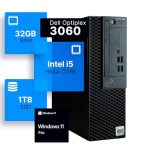
Prebuilt desktops, offered by major manufacturers and boutique system integrators, are the epitome of plug-and-play computing. The primary advantage is unparalleled convenience. You select a model based on its listed specifications, pay, and a complete, tested system arrives at your door. There's no need to research individual part compatibility, no assembly required, and no anxiety about potentially damaging expensive components during installation. For the vast majority of users, this streamlined process is a massive benefit, eliminating the technical barrier to owning a powerful machine.
Beyond convenience, prebuilt systems offer guaranteed compatibility and a single point of warranty support. Every component inside the case has been vetted to work together, and the entire system is covered under one warranty from the manufacturer. If something goes wrong, you contact one company for support, rather than diagnosing which of seven different component manufacturers is at fault. Major brands like Dell, HP, and Lenovo also often include proprietary recovery solutions and customer support lines, which can be invaluable for less technical users. In 2026, many boutique builders like Maingear, Origin PC, and Falcon Northwest offer "prebuilt" options with high-end, standard components and expert assembly, blending performance with white-glove service.
However, this convenience often comes at a cost, both financial and in terms of flexibility. Prebuilt systems, especially from large OEMs, frequently use proprietary motherboards, power supplies, and cases. This can severely limit your ability to upgrade in the future, as standard parts may not fit. You might also encounter "good enough" components in areas you don't see, like slower RAM, basic power supplies, or inadequate cooling solutions, as manufacturers optimize for cost and form factor over peak performance and longevity.
The Power of Custom: Tailored Performance and Control
Building a custom desktop is a journey of creation, resulting in a machine that is uniquely yours. The foremost benefit is complete control over every component. You choose the exact CPU for your workload, the perfect GPU for your target resolution and frame rate, a power supply with ample headroom and high efficiency, and a case that matches your aesthetic. This allows for optimized performance, where no dollar is wasted on an underperforming or unnecessary part. For specialized tasks like 4K video editing, competitive esports, or AI model training, a tailored build is unbeatable.
This control extends directly to the quality and future-proofing of the system. You can invest in a top-tier motherboard with robust power delivery for future CPU upgrades, a spacious case with excellent airflow, and a modular power supply from a reputable brand. This foundation means you can upgrade piecemeal over time—swapping out just the GPU or adding more storage—rather than replacing the entire system. The process of building itself is also a valuable learning experience, demystifying the technology you use daily and empowering you to troubleshoot and maintain your PC.
The challenges of custom building, however, remain significant. It requires a substantial investment of time to research parts, ensure compatibility (checking socket types, RAM clearance, power requirements), and physically assemble the system. There is inherent risk; a misplaced cable or improperly seated component can lead to a non-functional machine. Furthermore, you manage multiple warranties from different retailers and manufacturers. While the total cost can be lower than an equivalent prebuilt, it requires careful shopping and may not include a pre-installed operating system, adding another step.
Cost Analysis: Upfront Price vs. Long-Term Value
The financial comparison is rarely as simple as "custom is cheaper." In 2026, the landscape is nuanced. Mass-market prebuilt desktops from large OEMs can sometimes appear cheaper for a given set of core specs (CPU, GPU, RAM). This is because these companies purchase components in vast volumes at discounted rates and may use cost-effective (sometimes proprietary) parts for other system elements. However, this initial price advantage can be an illusion when you consider the long-term value and hidden compromises in component quality.
A custom build's cost is transparent: the sum of its parts. While you may pay more upfront for a similar tier of CPU and GPU, you are also investing in a higher-quality foundation—a better power supply, more efficient cooling, a standard motherboard with better connectivity, and faster storage. This translates to a system that runs cooler, quieter, and more reliably for longer, with a clear upgrade path. Over a 5-year period, the ability to upgrade just the GPU instead of buying a whole new PC can lead to significant savings.
For high-performance systems, boutique prebuilt vendors often charge a premium for their labor, warranty, and customer service. Here, a custom build almost always wins on pure price-to-performance. The key is to define "value" broadly. For a user who values time and peace of mind above all, the premium for a well-supported prebuilt is excellent value. For a user who enjoys the process and prioritizes performance-per-dollar and future flexibility, the custom route provides superior long-term value, even if the initial outlay is similar or slightly higher.
The 2026 Landscape: New Factors Shaping the Decision
The decision between custom and prebuilt is influenced by contemporary trends. The rise of powerful, compact form factors (SFF) has made small prebuilt systems incredibly appealing for space-constrained users, as building in a tiny case requires specialized knowledge and parts. Conversely, the growth of the DIY community, fueled by detailed YouTube tutorials and intuitive part-picking websites, has made custom building more accessible than ever before. Resources like PCPartPicker automatically flag compatibility issues, lowering the technical barrier.
Component standardization and the prevalence of powerful APUs (Accelerated Processing Units) have also changed the game. Many prebuilt systems now offer excellent performance for general use and light gaming without a discrete GPU, thanks to chips from AMD and Intel. Meanwhile, the custom market has been invigorated by the ease of installing components like M.2 SSDs and the widespread adoption of user-friendly case designs with tool-less entry and clear cable management guides.
Furthermore, the warranty and support gap has narrowed. Many component manufacturers now offer lengthy warranties (10 years on some power supplies, lifetime on some RAM), and the reliability of parts is generally high. While you still manage multiple contacts, the risk of failure is often overstated. On the prebuilt side, boutique integrators now often use all retail, standard parts, meaning you get their assembly warranty plus the individual manufacturers' warranties, offering the best of both worlds—though at a higher cost.
Making Your Choice: A Practical Decision Framework
To decide which path is right for you, start with an honest self-assessment of your technical confidence, time, and primary use case. Ask yourself: Are you willing to spend 5-15 hours researching and assembling parts? Does the idea of building a PC excite you or fill you with dread? Is your primary goal to have a working tool for tasks like office work and media consumption, or is maximizing frames-per-second in the latest games your key objective? Your answers will heavily steer your decision.
For most mainstream users who want a reliable machine for work, school, and casual use, a prebuilt from a reputable brand is the recommended choice. Look for models that use standard parts where possible and avoid the absolute cheapest configurations, as they often cut the most corners. For enthusiasts, gamers, and content creators who have specific performance demands and enjoy technology, custom building is profoundly rewarding and offers the best performance and flexibility. Consider a middle-ground option: some retailers offer a "choose your parts" service where they assemble a custom-selected part list for a fee.
Regardless of your choice, prioritize key components. Never skimp on the power supply or cooling, as these affect stability and longevity. For prebuilts, read detailed reviews to see what's inside the case beyond the CPU and GPU. For custom builds, start with your monitor's resolution and refresh rate, then choose a GPU to match, followed by a complementary CPU. Use online communities and build guides for validation. In 2026, there is no universally "wrong" choice, only a right choice for your specific situation.
Key Takeaways
- ✓ Prebuilt desktops offer supreme convenience, single-warranty support, and are ideal for users who prioritize a ready-to-use, hassle-free experience.
- ✓ Custom desktops provide complete control over component quality, optimized performance for specific tasks, superior long-term upgradeability, and potential cost savings on high-end systems.
- ✓ The true cost comparison must factor in long-term value, including component quality, upgrade paths, and hidden compromises in budget prebuilts.
- ✓ Modern trends like SFF PCs, better DIY resources, and component standardization have made both options more viable and nuanced than ever before.
- ✓ Your choice should be guided by an honest assessment of your technical skill, available time, performance needs, and whether you value the journey of building as much as the destination.
Frequently Asked Questions
Is building a PC really cheaper than buying a prebuilt?
It depends on the performance tier. For budget and mid-range systems, large OEM prebuilts can be competitive on initial price, but often use lower-quality foundational components. For high-performance gaming or workstations, building yourself typically offers better price-to-performance, as you avoid paying a premium for labor and can shop sales for each part. The long-term value of a custom build, through easier upgrades, often makes it cheaper over a 5-year span.
How difficult is it to build a PC for a first-timer?
In 2026, it is more accessible than ever. With a wealth of step-by-step video tutorials, intuitive part-picker websites that check compatibility, and user-friendly case designs, a careful and patient first-timer can successfully build a PC. The process is akin to advanced LEGO building, requiring more care than complex technical skill. The main requirements are the ability to follow instructions closely and the patience to do so.
What if a part in my custom build breaks? Do I have to figure it out myself?
You are responsible for initial troubleshooting to identify the faulty component, which can be a learning process using methods like "breadboarding" (testing minimal components outside the case). However, each part you purchase comes with its own manufacturer's warranty (often 3-10 years). Once you identify the faulty part, you would file a warranty claim with that specific manufacturer (e.g., ASUS for the motherboard, Corsair for the RAM) for a repair or replacement.
Are prebuilt gaming PCs from companies like Alienware or HP Omen a good deal?
Brands like these offer style, brand recognition, and integrated software. However, they are often priced at a significant premium for the performance offered. They may also use proprietary parts that hinder upgrades. It's crucial to read in-depth reviews of the specific model to see what power supply, cooling, and motherboard are used. Boutique system integrators often provide better value with standard, high-quality components at a similar price point.
Can I upgrade a prebuilt desktop later on?
This varies drastically. Many mass-market prebuilts use proprietary motherboards, power supplies, and cases, making upgrades like a new GPU impossible if it doesn't fit the case or if the power supply lacks the necessary connectors and wattage. Some "builder-friendly" prebuilts from companies like CyberPowerPC or iBuyPower use standard parts, making upgrades straightforward. Always check the specifications and internal layout before assuming a prebuilt is upgradeable.
Conclusion
The choice between a custom and a prebuilt desktop in 2026 is not a battle of absolute right and wrong, but a personal alignment of priorities. Prebuilt systems deliver a polished, supported, and immediate solution, perfect for those who view the computer as a tool. Custom builds offer a tailored, evolving, and deeply personal machine, ideal for those who see the process and the product as a hobby and a point of pride. Both paths lead to a powerful modern computer; the journey is what differs.
Your next step is to define your own needs, budget, and appetite for involvement. Use the framework provided to guide your self-assessment. Then, whether you decide to click "buy now" on a curated prebuilt or dive into the vibrant world of component reviews and build guides, do so with the confidence that comes from understanding the trade-offs. The perfect desktop for you is out there, waiting to be ordered or built.

Nathaniel Foster is an electronics expert focusing on consumer gadgets, smart devices, and innovative technology. He delivers practical reviews, buying guides, and troubleshooting tips to help readers make informed decisions and get the most out of their electronic products.