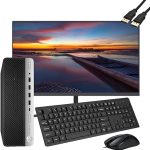
You press the power button, your desktop whirs to life, but your monitor remains a dark, silent void displaying the dreaded "No Signal" message. This modern-day digital heart attack can strike anyone, from casual users to seasoned professionals, instantly severing the critical link between you and your work, entertainment, or vital data. It’s a problem that feels catastrophic, but is almost always solvable with a systematic approach.
Understanding how to diagnose and fix a "No Signal" error is an essential digital life skill. This guide will transform you from a panicked user into a confident troubleshooter. You will learn a logical, step-by-step methodology to isolate the cause, whether it's a simple loose cable or a more complex hardware failure. We will cover everything from basic cable checks to advanced diagnostics involving your PC's internal components, ensuring you can restore your display and get back to what matters.
The First Response: Eliminating the Simple Culprits
Before you consider opening your PC case or suspecting major hardware failure, always start with the simplest and most common causes. The vast majority of "No Signal" issues are resolved at this stage. Begin by physically inspecting all connections. Power off both your computer and monitor. Firmly reseat both ends of the video cable—where it plugs into the monitor and where it plugs into the desktop's graphics output. Cables can work loose over time due to vibration or accidental tugs. Ensure the monitor's power cable is also secure and that the monitor is switched on; it sounds obvious, but it's a frequent oversight.
Next, verify your input source. Modern monitors often have multiple input ports like HDMI 1, HDMI 2, DisplayPort, and VGA. Use the monitor's physical buttons to open its On-Screen Display (OSD) menu and manually cycle through the available input sources. Your PC might be sending a signal, but the monitor is simply "listening" on the wrong port. Try a different video cable if you have a spare. Cables fail internally without showing external damage, and older cables may not support the resolution or refresh rate your system is trying to output.
Finally, test with a different display if possible. Connect your desktop to another monitor or even a modern television using the same cable. If the second display works, the issue is likely with your original monitor. If the second display also shows "No Signal," the problem is almost certainly with your desktop computer or the cable itself. This simple test effectively narrows down the field of potential suspects and guides your next steps.
Internal Hardware Diagnostics: RAM, GPU, and Connections
If the external checks fail, the issue lies within your desktop tower. The primary suspects here are the graphics card (GPU), the memory (RAM), and their connections to the motherboard. Start by powering down and unplugging your PC from the wall. Open the case in a well-lit, static-free environment. Ground yourself by touching the metal chassis before handling any components. Your first internal check should be the RAM. Gently press down on each RAM stick to ensure they are fully seated in their slots. If you have multiple sticks, try booting with only one stick installed, testing each stick in the primary slot (usually labeled A1 or DIMM1).
The graphics card is the next target. If your CPU has integrated graphics (most Intel non-F series and AMD G-series CPUs do), remove the dedicated GPU entirely. Plug your monitor cable directly into the corresponding video port on the motherboard's I/O panel. If you get a signal this way, the problem is with your dedicated graphics card, its power connections, or its PCIe slot. If you were using the motherboard port already, ensure the dedicated GPU is fully seated in its PCIe slot and that all necessary power cables from the Power Supply Unit (PSU) are firmly connected to it.
Listen closely during the boot process. Modern motherboards emit a series of beeps (if you have a system speaker) or flash diagnostic LEDs (often labeled BOOT, VGA, DRAM, CPU) when they encounter a hardware fault. A sequence of beeps or a solid light on the VGA LED indicates a graphics issue. A DRAM light or beep code points to memory. These signals are invaluable clues. Refer to your motherboard's manual to decode them, as the patterns differ by manufacturer.
Power Supply and Motherboard Considerations
An inadequate or failing Power Unit (PSU) is a common but often overlooked cause of display issues. Your PSU provides precise power to every component. If it cannot deliver stable power to the graphics card or motherboard, the system may power on (fans spin, lights glow) but fail to initialize properly, resulting in no display signal. Symptoms of a failing PSU can include random shutdowns, but often the first sign is a failure to POST (Power-On Self-Test), which manifests as a "No Signal" screen.
To test the PSU, you need to consider its age, wattage rating, and health. First, ensure it is powerful enough for your components, especially a high-end GPU. Use an online PSU calculator to estimate your system's needs. If the wattage is sufficient, you can perform a basic "paperclip test" to see if the PSU turns on independently, but this only confirms it powers on, not that it delivers stable power under load. The most reliable method is to swap in a known-good PSU of adequate wattage. If the system boots normally with the new PSU, you've found the culprit.
The motherboard itself is the central nervous system. If it has failed—due to a blown capacitor, damaged trace, or faulty PCIe slot—it cannot facilitate communication between the CPU, RAM, and GPU. Inspect the motherboard for any obvious signs of damage: bulging or leaking capacitors, burn marks, or foreign debris. Clearing the CMOS (Complementary Metal-Oxide-Semiconductor) can also help. This resets the BIOS/UEFI settings to factory defaults, which can resolve display issues caused by an incorrect configuration, such as an unstable overclock or wrong graphics initialization setting. Locate the small CMOS battery on the motherboard, remove it for a minute with the power unplugged, then reinsert it.
Advanced Software and Firmware Factors
While less common during a complete "No Signal" scenario, certain software and firmware issues can prevent a display output, especially after updates or new hardware installations. The most relevant is a corrupted or incompatible BIOS/UEFI firmware. If your PC was updating its BIOS and lost power, the firmware can become corrupted, rendering the motherboard unable to complete its startup routine. Recovery procedures vary by manufacturer but often involve a feature called "BIOS Flashback" or using a recovery USB drive.
In systems that were previously working, a recent driver update for your graphics card can sometimes cause a black screen on boot. If you can, try booting into Windows Safe Mode. Repeatedly interrupt the boot process (by turning the PC off as soon as the Windows logo appears) three times to trigger the Automatic Repair menu, from which you can access Safe Mode. In Safe Mode, use Display Driver Uninstaller (DDU) to completely remove the GPU drivers, then reboot to install fresh drivers from the manufacturer's website.
For users with multiple monitors or complex setups, Windows display settings can occasionally cause confusion. If you boot with a secondary monitor disconnected, Windows might try to output a signal to a non-existent display. To reset this, boot with only your primary monitor connected. Furthermore, check your GPU control panel settings (NVIDIA Control Panel or AMD Adrenalin Software) for any multi-display configurations that might be directing the signal in an unexpected way, such as setting the display to a resolution or refresh rate your monitor cannot support.
Systematic Troubleshooting Flowchart and When to Seek Help
The key to efficient troubleshooting is a logical, step-by-step process. Start externally and work your way in. First, check cables, monitor input, and test with another display. Second, move to internal hardware: reseat RAM and GPU, try integrated graphics. Third, listen for beep codes or watch diagnostic LEDs. Fourth, consider power supply sufficiency and health, and perform a CMOS reset. Fifth, as a last resort for previously working systems, consider software/firmware via Safe Mode driver removal or BIOS recovery. Document each step and any changes in behavior.
It is crucial to know when the problem is beyond a DIY fix. If you have gone through all the steps—tested with known-good components like a different PSU, GPU, and RAM in your system, and the issue persists—the fault likely lies with the motherboard or CPU. Diagnosing these components without professional equipment is very difficult. Similarly, if you see clear physical damage like scorch marks or liquid damage, it's time to stop and consult a professional repair service.
For those not comfortable handling internal components, many local computer repair shops offer free or low-cost diagnostics. Be prepared to tell them the exact steps you’ve already taken. This saves them time and you money. Remember, data recovery is a separate concern; if your hard drive or SSD is functional, it can be connected to another system to retrieve files, regardless of the state of your motherboard or GPU.
Key Takeaways
- ✓ Always start troubleshooting externally by checking cable connections, monitor power/input source, and testing with a different display or cable.
- ✓ Internal hardware issues are common culprits; reseating your RAM and graphics card can resolve many "No Signal" errors.
- ✓ Your motherboard provides vital clues through beep codes or diagnostic LEDs—consult your manual to interpret these signals.
- ✓ A failing or underpowered Power Supply Unit (PSU) can cause boot failures without a display, and a CMOS reset can fix configuration problems.
- ✓ If all hardware tests fail, the issue may be a failed motherboard or CPU, at which point seeking professional repair is the most practical step.
Frequently Asked Questions
My computer was working fine yesterday. Why do I have "No Signal" today?
This is often caused by a connection that worked loose overnight, a peripheral causing a conflict, or a sudden hardware failure. Always start with the basics: power cycle everything, check all cables, and try a different monitor input. Thermal expansion/contraction can subtly loosen connections, and power surges can damage components.
Can a faulty keyboard or mouse cause a "No Signal" error?
While rare, a severely malfunctioning USB device can sometimes cause the system to hang during the POST process, preventing it from initializing the display. Try booting with only the monitor, power, and keyboard connected. If it works, add devices back one by one to identify the culprit.
I hear my computer starting up (fans spinning, hard drive noise) but get no signal. What does this mean?
This indicates your system is receiving power but failing to complete the POST. The issue is likely with a core component: graphics card, RAM, motherboard, or PSU. The fact that it powers on but doesn't display points away from a simple power switch or wall outlet problem and toward the internal diagnostics steps.
How do I perform a CMOS reset, and will it delete my files?
To reset CMOS, power off and unplug your PC. Locate the circular, silver CMOS battery on your motherboard. Carefully remove it, wait 60-120 seconds, then reinsert it. Some motherboards have a two-pin "CLR_CMOS" jumper you can short with a metal object instead. This resets BIOS settings (like boot order and XMP) to factory defaults but does NOT affect files on your hard drive or SSD.
Is it worth fixing an old desktop with a "No Signal" error, or should I just buy a new one?
It depends on the cause and the system's age. A simple fix like a $20 cable or reseating a component is always worth it. Replacing a mid-range PSU or GPU on a 3-4 year old system can be cost-effective. However, if the motherboard or CPU on a very old system has failed, the cost of repair and the system's overall performance may not justify the investment compared to modern alternatives.
Conclusion
A "No Signal" message on your monitor is a frustrating barrier, but it is rarely an insurmountable one. By approaching the problem methodically—starting with the simplest external fixes and progressively moving to more complex internal diagnostics—you can identify and often resolve the issue yourself. We've covered the essential checklist: from cable and input verification to RAM and GPU reseating, interpreting motherboard error signals, evaluating your power supply, and considering software resets. This process empowers you to move from panic to practical action.
Do not be discouraged if the solution requires component replacement or professional help. The goal of troubleshooting is not just to fix the immediate problem, but to understand your system better. Use this guide as a roadmap, keep calm, and work through the steps. Your digital workspace is vital, and with the right knowledge, you can reclaim it. Start with the first cable check, and you're already on the path to a solution.

Nathaniel Foster is an electronics expert focusing on consumer gadgets, smart devices, and innovative technology. He delivers practical reviews, buying guides, and troubleshooting tips to help readers make informed decisions and get the most out of their electronic products.