In an age where digital communication reigns supreme, the ability to capture exactly what is on your screen is no longer a luxury—it is a necessity. you are troubleshooting a technical issue for IT support, creating a step-by-step tutorial for a colleague, preserving a fleeting moment from a video call, or documenting an important online transaction, knowing how to take a screenshot on your Dell desktop computer is an essential skill. Yet, many users still rely on a single method, unaware the powerful, time-saving alternatives built directly into their Windows operating system.
This comprehensive guide will walk you through every viable method for taking screenshots on a Dell desktop in 2026, from classic keyboard shortcuts to modern, AI-enhanced tools. We will cover the built-in Snipping Tool, the versatile Snip & Sketch (now integrated into the Snipping Tool), the Print Screen key’s various functions, and even third-party applications for advanced users. By the end of this article, you will not only know how to capture your screen but also how to choose the right tool for every specific situation, saving you time and frustration. Let us transform you from a casual user into a screenshot expert.
The Classic Print Screen (PrtScn) Method: First Line of Defense
The most fundamental method for taking a screenshot on any Dell desktop involves the Print Screen key, often abbreviated as PrtScn, PrtSc, or PrtScrn. Located in the top row of your keyboard, typically near the F12 key, this button has been a staple of PC computing for decades. When you press the PrtScn key alone, Windows captures an image of your entire screen and copies it to your clipboard. This is a silent operation—you will not see any visual confirmation—but the image is now ready to be pasted into any program that accepts images, such as Microsoft Word, Paint, or an email body. Simply open your desired application and press Ctrl + V to paste the screenshot.
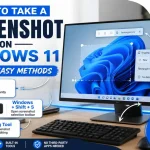
A common frustration with the basic PrtScn method is the lack of feedback. To address this, Windows introduced a variation: pressing the Windows key + PrtScn simultaneously. This powerful combination does two things at once. First, it captures the entire screen. Second, it automatically saves the screenshot as a PNG file to a dedicated folder. You can find your screenshots by navigating to This PC > Pictures > Screenshots This is the ideal method for users who need to take multiple full-screen captures in quick succession, as it eliminates the need to manually paste and save each image. The screen will briefly dim to confirm the capture, providing the visual feedback the basic method lacks.
For users who only need to capture currently active window—rather than the entire desktop—the Alt + PrtScn shortcut is invaluable. This is for capturing a single dialog box, a specific application window, or a browser tab without including the taskbar or other background elements. Like the basic PrtScn, this copies the image to your clipboard, requiring you to paste it into an application. While this method is slightly less automated, it offers precision and reduces the need for cropping later. In 2026, despite rise of advanced tools, these classic shortcuts remain the fastest and most reliable methods for quick, no-frills captures.
The Modern Powerhouse: Windows Snipping Tool (2026 Edition)
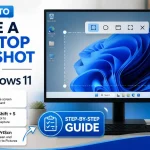
If you are looking more control over your screenshots without installing third-party software, the Windows Snipping Tool is your best friend. In 2026, Microsoft has integrated the features of the old Snip & Sketch application into a single, unified Snipping Tool. This tool is pre-installed on every Dell desktop running Windows 10 or Windows 11 and can be launched instantly by pressing the Windows key + Shift + S. This keyboard shortcut is arguably the most important one to remember, as it immediately darkens your screen and opens a small toolbar at the top of your display, giving you four capture modes: Rectangular Snip, Freeform Snip, Window Snip, and Fullscreen SnipThe Rect Snip is the most commonly used mode. After pressing Windows key + Shift + S, your cursor turns into a crosshair. Click and drag to draw a rectangle around the area you want to capture. Once you release the mouse button, the screenshot is automatically copied to your clipboard. A notification will also appear in the bottom-right corner of your screen. Clicking this notification opens the screenshot in the Snipping Tool editor, where you can annotate, crop, or save the image. The Freeform Snip is a hidden gem for capturing irregular shapes, like a specific icon or a non-rectangular element on a webpage. You simply draw a shape around the object, and the tool captures everything inside your drawn line.
The Window Snip mode is a more refined version of the Alt + PrtScn shortcut. When selected, it highlights each open window as you hover over it. Clicking on a window instantly captures only that window, including its drop shadows, for a polished, professional look. Finally, the Fullscreen Snip does exactly what it sounds like, capturing your entire display. The key advantage of using the Snipping Tool over the basic PrtScn is the immediate visual feedback and the ability to choose your capture area. Furthermore, the 2026 Snipping Tool includes a new feature: screen recording. You can now record a video of your screen activity directly from the same toolbar, making it a one-stop shop for both static and dynamic captures.
Advanced Techniques: Delayed Screenshots and the Game Bar
Sometimes, the perfect screenshot requires capturing a moment that is not immediately accessible, such as a tooltip that disappears when you click the mouse or a context menu that only appears on a right-click. For these scenarios, the Snipping Tool offers a vital feature: the delay function. To access it, open the Snipping Tool application from the Start Menu (type "Snipping Tool" into the search bar). In the application window, you will see a "Delay" button. You can set a delay of 3, 5, or seconds. After selecting your delay time, click the "New" button. The screen will then count down, giving you time to set up the exact state you want to capture—for example, right-clicking to open a menu. Once the timer expires, the capture toolbar appears, and you can select your snip area. This is an incredibly powerful technique for capturing dynamic interface elements.
Another specialized tool built into Windows is the Game Bar, accessible by pressing Windows key + G. While designed primarily for gamers to record gameplay, the Game Bar is an excellent tool for taking screenshots of full-screen applications that the standard Snipping Tool cannot capture, such as certain games, video players, or legacy software. When the Game Bar overlay appears, you will see a toolbar with various widgets. The camera icon in the toolbar takes a screenshot of the current window or game. By default, these screenshots are saved to your Videos > Captures folder. You can also use the shortcut Windows key + Alt + PrtScn to take a Game Bar screenshot without opening the overlay.
It is important to note that the Game Bar must be enabled for these shortcuts to work. You can check this by going to Settings > Gaming > Game Bar and ensuring the toggle is turned on. While the Bar is ideal for general desktop screenshots (it often includes the overlay itself), it is the only reliable built-in method for capturing content from full-screen exclusive applications. For users who work with 3D modeling software, play PC games, or watch streaming content in full-screen mode, mastering the Game Bar is essential for capturing high-quality screenshots without black screens or errors.
Third-Party Tools: When Built-In Options Are Not Enough
While Windows built-in tools are sufficient for 90% of users, power users and professionals often require more advanced features. This is where third-party screenshot tools shine. One of the most popular and highly recommended free tools is ShareX. Available for download from the Microsoft Store or its official website, ShareX is an open-source powerhouse. It offers everything the Snipping Tool does, plus features like automatic image uploading to cloud services (Imgur, Google Drive, Dropbox), OCR (Optical Character Recognition) to extract text from screenshots, scrolling capture for entire webpages, and a vast array of post-capture effects like adding watermarks, borders, or annotations. For a Dell desktop user who takes dozens of screenshots daily for documentation or social media, ShareX can automate the entire workflow.
Another excellent option is Greenshot, which strikes a perfect balance between simplicity and power. It is lightweight, integrates seamlessly into the system tray, and offers a clean interface for annotating screenshots with arrows, text boxes, and highlights. Greenshot is particularly popular in corporate environments because it allows you to quickly send screenshots to a printer, email client, or Microsoft Office application. For users who prefer a more polished, design-focused tool, Snagit by TechSmith is the industry standard. While it is a paid application, Snagit offers unparalleled features, including step-by-step video guides, a library for organizing captures, and the ability to create GIFs from screen recordings. It is an investment for professionals who create training materials or technical documentation.
When choosing a third-party tool, consider your specific needs. If you need to capture long webpages or chat logs, look for a tool with scrolling capture. If you frequently share screenshots with a team, look for one with built-in cloud upload and URL generation. For most users, however, the built-in Snipping Tool combined with the classic Print Screen shortcuts will be more than adequate. The key is to experiment with a few options to find the workflow that feels most natural. Remember to download software only from official sources to avoid malware.
Key Takeaways
- ✓ The Print Screen (PrtScn) key copies entire screen to your clipboard; Windows key + PrtScn saves it automatically to the Pictures > Screenshots folder.
- ✓ Windows key + Shift + S launches the modern Snipping Tool, offering rectangular, freeform, window, and full-screen capture modes with instant editing capabilities.
- ✓ Use the Snipping Tool's delay function (3, 5, or 10 seconds) to capture context menus and tooltips that disappear on mouse click.
- ✓ For full-screen games and applications, use the Game Bar (Windows key + G) or Windows key + Alt + PrtScn to avoid black screens.
- ✓ If the PrtScn key does not work check your Dell keyboard's Fn Lock setting; you may need to press Fn + PrtScn.
Frequently Asked Questions
How do I take a screenshot on a Dell desktop without a Print Screen key?
If your Dell keyboard lacks a dedicated PrtScn key, or if it is broken, you can use the on-screen keyboard. Type "On-Screen Keyboard" into the Windows search bar and open it. You will see a virtual PrtScn key that you can click with your mouse. Alternatively, you can use the Windows key + Shift + S shortcut to open the Snipping Tool, which does not require the PrtScn key at all. You can also remap another key to act as PrtScn using third-party software like AutoHotkey.
Where do my screenshots go when I use Windows key + PrtScn?
When you press Windows key + PrtScn, the screen will dim briefly, and the screenshot is automatically saved as a PNG file. You can find your full-screen captures by opening File Explorer and navigating to This PC > Pictures > Screenshots. The files are named "Screenshot (1).png", "Screenshot (2).png", and so on. you do not see this folder, it may have been accidentally deleted; you can create a new folder named "Screenshots" inside your Pictures folder, and Windows will start using it again.
Can I take a screenshot of just one monitor on a dual-monitor Dell setup?
, there are several ways. The easiest is to use the Snipping Tool (Windows key + Shift + S) and select the "Window Snip" mode, then click on the window on the monitor you want to capture. Alternatively, you can use the "Rectangular Snip" mode to draw a box around the monitor's content. If you want to capture the entire of only one monitor, press Windows key + Shift + S, select "Fullscreen Snip," and it will capture both monitors. You will then need to crop the image. For a single-monitor full-screen capture, use Alt + PrtScn to capture only the active window on that monitor.
How do I take a scrolling screenshot of an entire webpage on my Dell desktop?
The built-in Windows tools do not support scrolling screenshots. You will need a third-party tool. The best free option is ShareX, which has a "Scrolling Capture" feature. After installing ShareX, select the "Scrolling Capture" option from its taskbar menu, then click on the window you want to capture. The tool will automatically scroll down and stitch the images together. Another excellent option is the "GoFullPage" browser extension for Chrome or Edge, which is specifically designed for capturing full webpages with a single click.
Why is my screenshot blurry or low quality?
Screenshots taken with the built-in Windows tools are captured at your screen's native resolution, so they should not be blurry. If your screenshots appear blurry, it is likely due to the application you are pasting them into. For example, pasting a high-resolution screenshot into a Word document or an email that compresses images will reduce. To preserve quality, always save the screenshot as a PNG file (which is lossless) rather than pasting it directly. If you are using a third-party tool, check its settings to ensure it is not compressing the image. Also, ensure your Dell desktop's display scaling is set to 100% in Display Settings for the sharpest captures.
Conclusion
Taking a screenshot on your Dell desktop computer in 2026 is a remarkably flexible process, with tools ranging from the one-button simplicity of the Print Screen key to the sophisticated, feature-rich environment of third-party applications like ShareX. We have explored the foundational methods—PrtScn, Alt + PrtScn, and Windows key + PrtScn—which remain the fastest for quick captures. We then delved into the modern Snipping Tool, your go-to for precision and annotation, and covered specialized scenarios like delayed captures for menus and the Game Bar for full-screen applications., we addressed common troubleshooting issues and the advanced capabilities of third-party.
Now you are equipped with this knowledge, the next step is practice. Spend a few minutes trying each method described in this guide. Memorize the shortcut Windows key + Shift + S, as it will likely become your most-used tool. For repetitive tasks, consider installing ShareX to automate your workflow. By mastering these techniques, you will not only save time but also communicate more effectively, whether you are helping a friend, documenting a project, or simply preserving a digital memory. Your Dell desktop is a powerful machine—now you have the skills to capture its output with confidence and precision.

Nathaniel Foster is an electronics expert focusing on consumer gadgets, smart devices, and innovative technology. He delivers practical reviews, buying guides, and troubleshooting tips to help readers make informed decisions and get the most out of their electronic products.