In an age where digital communication is paramount, ability to capture exactly what is on your screen has become an essential skill. Whether you are a professional documenting a workflow, a student saving a lecture slide, or a gamer sharing a high-score moment, knowing how to take a screenshot on a Windows desktop is fundamental tool for productivity and communication. Yet, many users still rely on a single, basic method, unaware of the powerful and versatile tools built directly into their operating system.
This comprehensive guide will transform you from a casual taker into a power user. We will explore every native method available in Windows 10 and Windows 11 in 2026, from the classic Print Screen key to the advanced Snipping Tool and the game-changing Xbox Game Bar. You will learn not just how to capture your screen, but how to capture it with precision, annotate it for clarity, and save it in the optimal format for your needs. By the of this article, you will have a complete toolkit for any screenshot scenario.
The Classic Print Screen (PrtScn) Methods: Simple and Direct
The Print Screen key, often abbreviated as PrtScn, PrtSc, or similar, remains the most universally recognized method for taking a screenshot on a Windows desktop. Its simplicity is its greatest strength. Pressing the PrtScn key alone captures your entire screen and copies the image to your clipboard. From there, you must paste it into an application like Microsoft Paint, Word or an email client by pressing Ctrl + V. This method is ideal when you need to immediately edit or insert the screenshot into a document, as it gives you full control over the next step.
For users who want a more streamlined approach, the Alt + PrtScn combination is a powerful alternative. Instead of capturing the entire screen, this shortcut captures only the currently active. This is incredibly useful when you have multiple windows open and only need to share the content of one specific application, such as a browser window or a spreadsheet. The image is again copied to your clipboard, ready to be pasted This method saves time by eliminating the need to crop out irrelevant background information.
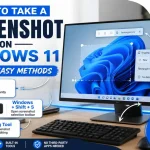
A third variation, introduced in later versions of Windows, is the Windows key + PrtScn shortcut. This is the most efficient method for saving a full-screen screenshot directly to your hard drive. When you press these keys together, the screen will briefly dim, and the screenshot is automatically saved as a PNG file in your Pictures folder, inside a subfolder named Screenshots. This eliminates the clipboard step entirely, making it perfect for quickly capturing and storing a visual record without any additional actions. For users who take frequent screenshots for reference, this is often the preferred method.
The Snipping Tool: Precision and Annotation Powerhouse
For users who require more than just a simple capture, the Snipping Tool (and its modern successor, Snipping Tool for Windows 11) is an indispensable application. In 2026, this tool has been fully integrated and refined, offering a suite of capture modes that go far beyond the full-screen approach. You can access it by searching for Snipping Tool in the Start Menu. The tool provides four primary modes: Free-form Snip, Rectangular Snip, Snip, and Full-screen Snip. The Rectangular Snip is the most commonly used, allowing you to click and drag a precise box the area you want to capture.
The true power of the Snipping Tool lies in its built-in annotation features. Once you have taken a snip, the image opens in a simple editor where you can immediately draw on it using a pen, highlighter, or eraser. This is invaluable for pointing out specific details in a screenshot, such as a button to click in a tutorial or an error message in a bug report. You can also crop the image further, copy it to the clipboard, or save it directly. The tool supports saving in PNG, JPEG, GIF, and even the older MHT format, giving you flexibility based on your needs.
A major advancement in recent years is the integration of the Snipping Tool with the Windows key + Shift + S shortcut. Pressing this combination instantly opens a small toolbar at the top of your screen, allowing you to choose your snip mode without opening the full application. The captured image is automatically copied to your clipboard and also saved to your Screenshots folder if you have enabled that setting. This shortcut has become the gold standard for power users who need speed and precision, as it bypasses the app interface entirely and gets you straight to capturing and annotating.
The Xbox Game Bar: Capturing Games and Full Applications
While the name suggests it is only for gaming, the Xbox Game Bar is a versatile overlay that works with almost any full-screen application on your Windows desktop. Activated by pressing Windows key + G, the Game Bar provides a suite of widgets, including a powerful capture tool. This is the best method for taking screenshots of games, videos, or any application that runs in full-screen mode, as traditional methods like PrtScn can sometimes capture a black screen or a frozen frame.
The Game Bar’s capture widget allows you to take a screenshot by clicking the camera icon or by using the dedicated shortcut Windows key + Alt + PrtScn. When you use this shortcut, the screen will flash, and the screenshot is saved directly to your Videos folder, inside a subfolder Captures. This method is incredibly reliable for capturing content that is rendered by your graphics card, ensuring you get a crisp, accurate image of your game or application without any interference from the desktop environment.
Beyond screenshots, the Game Bar also offers a record feature, allowing you to capture video clips of your gameplay or application usage. This is a fantastic tool for creating quick tutorials or recording bugs in action. You can also use the Game Bar to broadcast your screen to services like Twitch or Mixer. For users who frequently work with full-screen applications or need to capture dynamic content, the Xbox Game Bar is essential part of the Windows screenshot toolkit, providing a level of reliability and functionality that standard methods cannot match.
Third-Party Tools: Expanding Your Capabilities
While Windows offers a robust set of native tools, third-party applications can provide advanced features for professional users. Tools like Snagit, Greenshot, and Lightshot have been popular for years, and in 2026, they continue to offer capabilities that go beyond what is built into the operating system These applications often include features like scrolling window capture, which allows you to take a screenshot of an entire webpage or document that extends beyond the visible screen area, saving you from having to stitch multiple images together.
Another significant advantage of third-party tools is their advanced editing and sharing capabilities. Many of these applications allow you to add text boxes, arrows, step numbers, and blur effects directly onto your screenshot. They also integrate seamlessly with cloud services, enabling you to upload a screenshot to a service like Imgur or Dropbox with a single click and receive a shareable link. This a massive time-saver for teams that need to share visual feedback quickly, such as in software development or design reviews.
For users who need to capture video as well as still images, tools like OBS Studio (Open Broadcaster Software) are free and incredibly powerful. While OBS is primarily a video recording and streaming tool, it can also capture high-quality screenshots. The key is to choose a tool that matches your workflow. If you are a casual user, the built-in Windows tools are likely sufficient. However, if you are a professional who regularly creates documentation, tutorials, or reports, investing time in learning a third-party tool can dramatically increase your efficiency and the quality of your output.
Optimizing Your Screenshots: File Formats, Storage, and Best Practices
Knowing how to take a screenshot is only half the battle; understanding how to manage them is equally important. The default file format for most Windows screenshots is PNG (Portable Network Graphics). PNG is a lossless format, meaning it preserves every detail of the image, making it ideal for screenshots with text, sharp lines, and user interfaces. However, PNG files can be large. If you are taking many screenshots and storage space is a concern, consider saving them as JPEG (Joint Photographic Experts Group), which uses compression to reduce file size at the cost of some image quality.
Organizing your screenshots is crucial for productivity. By default, screenshots taken with Windows key + PrtScn are saved to Pictures > Screenshots, while Game Bar captures go to Videos > Captures. To avoid clutter, create a dedicated folder structure. For example, you might have a main Screenshots folder with subfolders for Work, Personal, and Projects. This makes it easy to find a specific screenshot weeks or months later. Many third-party tools also offer automatic naming and folder organization based on the date, application, or a custom template.
Finally, consider your privacy and security. Before sharing a screenshot, always review it for sensitive information. This includes email addresses, passwords, credit card numbers, personal messages, and confidential documents. Use the annotation tools in the Snipping Tool or a third-party app to blur or black out this information. A simple mistake of sharing an unedited screenshot have serious consequences. By developing a habit of reviewing and redacting your screenshots before sharing, you protect yourself and your organization from potential data leaks.
Key Takeaways
- ✓ The Windows key + PrtScn shortcut is the fastest way to save a full-screen screenshot to your hard drive.
- ✓ The Windows key + Shift + S shortcut opens the Snipping Tool’s capture menu instantly, allowing for precise, custom-shaped screenshots.
- ✓ The Xbox Game Bar (Windows key + G) is the most reliable method for capturing full-screen games and applications.
- ✓ Third-party tools like Snagit and Greenshot offer advanced features like scrolling capture and one-click cloud sharing for professional workflows.
- ✓ Always review and redact sensitive information in your screenshots before sharing them to protect your privacy and security.
Frequently Asked Questions
Why is my screenshot just a black screen when I use Print Screen?
This often happens when you are trying to capture a full-screen or a video playing in a protected media player. The graphics card or the application itself may block the standard Print Screen function. To fix this, use the Xbox Game Bar (Windows key + G) or the Snipping Tool (Windows key + Shift + S), which are designed to work with these types of content.
Where do my screenshots go when I use the Windows key + PrtScn shortcut?
They are automatically saved as PNG files in your Pictures folder, inside a subfolder named Screenshots. You can find this by opening File Explorer, navigating to This PC, then Pictures, and finally the Screenshots folder.
Can I change the default save location for my screenshots?
Yes, you can. For screenshots taken with Windows key + PrtScn, you can move the Screenshots folder Right-click the Screenshots folder in your Pictures directory, select Properties, go to the Location tab, and click Move. Choose your new desired folder, and Windows will redirect all future screenshots there.
What is the best file format to use for screenshots?
For most purposes, PNG is the best choice because it is lossless and preserves details like and sharp lines. Use JPEG if you need to save storage space and the image quality loss is acceptable. Use GIF for simple, low-color images or animations.
How do I take a screenshot of a specific window without the desktop background?
The easiest way is to click on the window you want to capture to make it the active window, then press Alt + PrtScn. This copies only that window to your clipboard. You can then paste it into an image editor or document. Alternatively, use the Snipping Tool’s Window Snip mode.
Conclusion
Taking a screenshot on a Windows desktop in 2026 is no longer a one-size-fits-all task. From simple Print Screen key to the precision of the Snipping Tool and the power of the Xbox Game Bar, you now have a comprehensive arsenal of tools at your disposal. By understanding the strengths of each method, you can choose the right one for every situation, saving time and producing higher-quality captures. Whether you are documenting a process, sharing a funny moment, or reporting a bug, the right technique makes all the difference.
Now it is your turn to put this knowledge into practice. Start by memorizing the three most powerful shortcuts: Windows key + PrtScn for full-screen saves, Windows key + Shift + S for custom snips, and Windows key + Alt + PrtScn for game captures. Experiment with the Snipping Tool’s annotation features to add clarity to your images. By integrating these habits into your daily workflow, you will not only become more efficient but also communicate more effectively with colleagues, friends, and family. The power to capture your digital world is at your fingertips.

Nathaniel Foster is an electronics expert focusing on consumer gadgets, smart devices, and innovative technology. He delivers practical reviews, buying guides, and troubleshooting tips to help readers make informed decisions and get the most out of their electronic products.