Imagine being able to access your office computer from a beach in Bali, or pulling up a critical file from your home PC while sitting in a coffee shop halfway across the world. This is the power of a remote desktop connection, and in 2026, it has become an essential tool for professionals, IT administrators, and even casual users who want to stay connected to their digital lives. Whether you are managing a team across time zones or simply need to check on a home server, setting up remote desktop access is no longer a luxury—it is a necessity for modern productivity.
This comprehensive guide will walk you through everything you need to know about setting up remote desktop in 2026. We will cover the built-in tools available in Windows, macOS, and Linux, explore third-party alternatives that offer enhanced features, and dive deep into the security protocols you must implement to protect your data. By the end of this article, you have a clear, step-by-step to establish a reliable and secure remote connection, regardless of your technical skill level.
Understanding the Core Components of Remote Desktop
Before you begin the setup process, it is crucial to understand the three fundamental components that make remote desktop work. First, you have the host computer—the machine you want to access remotely. This is typically your work desktop or home server that remains powered on and connected to the internet. Second, have the client device, which is the laptop, tablet, or smartphone you will use to initiate the connection. Third, and most importantly, you have the network infrastructure, which includes your router, firewall settings, and internet connection. In 2026, most modern operating systems have built-in remote desktop protocols, but they all rely on these same elements.
The most common protocol used today is Microsoft's Remote Desktop Protocol (RDP), which is deeply integrated into Windows 10 and Windows 11. For macOS users, Apple offers Screen Sharing built into the operating system, while Linux users typically rely on VNC (Virtual Network Computing) or X2Go. The key difference between these protocols lies in performance and security. RDP, for example, is highly optimized for Windows environments and offers excellent bandwidth management, making it ideal for low-speed connections. VNC, on the other hand, is platform-agnostic but can be slower and less secure if not properly configured.
A critical concept to grasp is the difference between local network access and remote internet access. Setting up remote desktop for use only within your home or office network is relatively simple and requires minimal configuration. However, accessing your host computer from outside your local network—such as from hotel or Wi-Fi— additional steps like port forwarding, dynamic DNS, or using a VPN. In 2026, the safest and most user-friendly approach is to avoid opening ports directly to the internet and instead use a VPN or a third-party relay service, which we will discuss in detail later.
Step-by-Step Setup for Windows Remote Desktop (Built-in RDP)
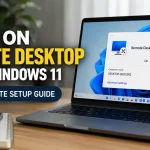
Setting up the built-in Remote Desktop on Windows is the most straightforward method for users who need to access a Windows 10 or Windows11 machine. Begin by ensuring your host computer is running Windows Pro, Enterprise, or Education edition, as the Remote Desktop host feature is not available on Windows Home edition. To enable it, open the Settings app, navigate to System, then select Remote Desktop. Toggle the switch to On, and make a note of the PC name displayed "How to connect to this PC." You will need this name when connecting from client device.
Next, you must your user account for remote access. By default, the account you are currently logged into will have access, but you can add additional users by clicking "Select users that can remotely access this PC." It is highly recommended to create a dedicated local user account specifically for remote connections rather than using your primary administrative account. This adds a layer of security, as you can restrict the remote user's permissions and monitor their activity separately. For example, you might create a user named "RemoteAdmin" with a strong, unique password that is different from your daily login credentials.
The final step for Windows involves network configuration. If you are only connecting within your local network, you are done. For remote access over the internet, you will need to configure your router to forward port 3389 (the default RDP port) to the internal IP address of your host computer. However, this is where many users make a critical mistake. Exposing port 3389 directly to the internet is a major security risk, as automated bots constantly scan for open RDP ports to attempt brute-force attacks. A much safer alternative in 2026 is to use a server on your home network. Connect to the VPN from your client device first, and then use the local IP address of the host computer to initiate the RDP connection. This keeps all RDP traffic safely inside your encrypted VPN tunnel.
Setting Up Remote Desktop on macOS and Linux
For macOS users, Apple provides a built-in Screen Sharing feature that is remarkably easy to set up. On your Mac host, go to System Settings, General, select Sharing. Toggle on "Screen Sharing." You will see a network address displayed, typically something like "vnc://192.168.1.10." To connect from another Mac on the same network, open the Finder, click Go, then Connect to Server, and enter that VNC address. For remote access over the internet, the same VPN advice applies: connect to your home VPN first, then use the local IP address. macOS also supports the VNC protocol, which means you can connect from a Windows or Linux client using a VNC viewer application like RealVNC or TightVNC.
Linux users have several options, but the most reliable and secure method in 2026 is using X2Go combined with an SSH tunnel. X2Go is a high-performance remote desktop solution that works with most Linux distributions. To set it up, install the X2Go server on your Linux host using your package manager (e.g., "sudo apt install x2goserver x2goserver-xsession" on Ubuntu). On your client device, install the X2Go client. The beauty of X2Go is that it can tunnel its traffic through SSH, which is inherently encrypted and secure. This means you do not need to open any additional ports on your router—just ensure SSH (port 22) is accessible, or better yet, use a VPN.
An alternative for Linux is to use a VNC server like TigerVNC or TightVNC. However, VNC is not encrypted by default, so you must always tunnel it through SSH or use a VPN. To set up a basic VNC server, install it with "sudo apt install tigervnc-standalone-server," then run "vncserver" to start a session. You will be prompted to set a password. On your client, use a VNC viewer to connect to "your-linux-ip1" (the :1 indicates the display number). For remote access, create an SSH tunnel by running "ssh -L 5901:localhost:5901 user@your-host-ip" on your client, then point yourNC viewer to "localhost:5901." This method is highly secure and widely used by system administrators.
Third-Party Alternatives: When Built-In Tools Are Not Enough
While built-in tools are excellent for basic needs, they often fall short when you require cross compatibility, features like file and clipboard sharing, or the ability to bypass complex firewall configurations. This is where third-party remote desktop applications shine. In 2026, the market remains TeamViewer, which offers a free tier for personal use and robust commercial plans. TeamViewer works by establishing connection through its own relay servers, meaning you do not need to configure port forwarding or a VPN. Simply install the software on both the host and client, share the generated ID and password, and you are connected. It supports Windows, macOS, Linux, iOS, and Android.
Another powerful alternative is AnyDes, which is for its incredibly low latency high frame rates, making it ideal for graphic-intensive tasks or video editing. AnyDesk uses a proprietary codec called DeskRT that compresses data efficiently, even on slow connections. Like TeamViewer, it uses a relay system, but it also supports direct peer-to-peer connections when possible. For users who prioritize privacy self-hosting, RustDesk has gained significant popularity. RustDesk is open-source and allows you to host your own relay server, giving you complete control over your data. This is particularly appealing for businesses with strict compliance requirements.
For IT professionals managing multiple machines, Splashtop offers a compelling solution with features like remote wake-on-LAN, multi-monitor support, and session recording. Splashtop requires a subscription, but its performance and reliability are top-tier. A common thread among all these third-party tools is their emphasis security. They all use end-to-end encryption by default, and many offer two-factor authentication. When a third-party solution, consider your specific needs: if you need occasional access to a single computer, the free tier of TeamViewer or AnyDesk is sufficient. If you are managing a fleet of machines, a paid solution like Splashtop or a self-hosted RustDesk setup will provide better control and scalability.
Essential Security Practices for Remote Desktop in 2026
Security is the single most important aspect of setting up remote desktop, and the landscape in 2026 demands a proactive approach. The first and most critical rule is to never expose the default RDP port (3389) directly to the internet. Automated attacks are relentless, and a single weak password can lead to a full system compromise. Instead, always use a VPN as your first line of defense. Services like WireGuard or OpenVPN are free, fast, and encrypt all traffic between your client and your home network. Once connected to the VPN, you can safely use RDP or VNC over the local network as if you were sitting in the same room.
The second pillar of security is strong authentication. Enable Network Level Authentication (NLA) on your Windows host, which requires the client to authenticate before a full RDP session is established. Use complex passwords that are at least 16 characters and include a mix of uppercase, lowercase, numbers, and symbols. Even better, implement two-factor authentication (2FA) using an app Authy or Google Authenticator. Many third-party tools like TeamViewer and Splashtop support 2FA natively. For Windows RDP, you can use a third-party gateway like Remote Desktop Gateway (RD Gateway) to add an additional authentication layer.
Finally, keep your systems updated and monitor access logs. In 2026, zero-day are discovered regularly, so ensure your operating system and remote desktop software are always patched. Enable logging on your host computer to track who is connecting and when. On Windows, you can view RDP connection logs in the Event Viewer under "Windows Logs > "Security." Look for Event ID 4624 (successful logon) and 4625 (failed logon). If you see repeated failed attempts from unknown IP addresses, it is a sign that your security measures need strengthening. Consider implementing IP whitelisting, where only specific IP addresses are allowed to initiate remote connections. This can be done at the router level or through your VPN configuration.
Key Takeaways
- ✓ Always use a VPN as a secure tunnel before initiating any remote desktop connection to avoid exposing ports to the internet.
- ✓ For Windows, ensure you are using the Pro or Enterprise edition to access the built-in Remote Desktop host feature.
- ✓ macOS and Linux users should leverage SSH tunneling or VPNs to encrypt VNC and X2Go connections.
- ✓ Third-party tools like TeamViewer, AnyDesk, and RustDesk offer cross-platform compatibility and bypass complex network configurations.
- ✓ Implement strong passwords, Network Level Authentication, and two-factor authentication to protect against brute-force attacks.
Frequently Asked Questions
Can I use Remote Desktop on Windows Home edition?
No, the built-in Remote Desktop host feature is not available on Windows Home edition. However, you can use-party tools like TeamViewer or AnyDesk, which work on all editions of Windows. Alternatively, you can upgrade to Windows Pro to unlock the native RDP host functionality.
Is it safe to use Remote Desktop over public Wi-Fi?
It is not safe use Remote Desktop directly over public Wi-Fi without encryption. Always connect to a VPN first before initiating any remote session. The VPN encrypts all traffic, preventing anyone on the same public network from intercepting your connection or credentials.
What is the difference RDP and VNC?
RDP (Remote Desktop Protocol) is a proprietary protocol developed by Microsoft, optimized for Windows, and generally offers better performance and bandwidth management. VNC (Virtual Network Computing) is an open-source protocol that works across all platforms but is typically slower and less secure unless encrypted with SSH or a VPN.
How do I change the default RDP port for security?
You can change the default RDP port (3389) by editing the Windows Registry. Navigate to HKEY_LOCAL_MACHINESystemCurrentControlSetControlTerminal ServerWinStationsRDP-Tcp, and modify the PortNumber value. However, changing the port alone is not a strong security measure; it only deters casual scanners. Always combine this with VPN and strong authentication.
Why is my remote desktop connection so slow?
Slow connections are often caused by limited upload bandwidth on the host computer's internet connection, high latency, or incorrect display settings. Reduce the display resolution and color depth in your remote desktop client settings. Also, disable background wallpaper and animations. For best performance, use a wired Ethernet connection on the host computer.
Conclusion
Setting up remote desktop in 2026 is a powerful way to extend your productivity and access your digital workspace from anywhere in the world. We have covered the essential components, from understanding the underlying protocols to configuring built-in tools on Windows, macOS, and Linux. We also explored robust third-party alternatives that simplify the process and highlighted the non-negotiable security practices that protect your data from modern threats. The key takeaway is that convenience should never come at the expense of security.
Now is the time to take action. Start by assessing your needs: do you need occasional access to a single machine, or are you managing a network of computers? Choose the method that best fits technical comfort level and security requirements. Begin with a simple VPN setup and a single remote connection, then expand as you gain confidence. Remember, the goal is not just to connect, but to connect securely and reliably. By following the steps outlined in this guide, you will be well on your way to mastering remote desktop access and unlocking a new level of flexibility in your digital life.

Nathaniel Foster is an electronics expert focusing on consumer gadgets, smart devices, and innovative technology. He delivers practical reviews, buying guides, and troubleshooting tips to help readers make informed decisions and get the most out of their electronic products.